Origin
United States
Lifespan
18–22 years
Weight
3–5 kg
Group
Semi-Longhair
Personality
Colors & Patterns
Seal Point · Blue Point · Chocolate Point · Lilac Point
Balinese
About This Breed
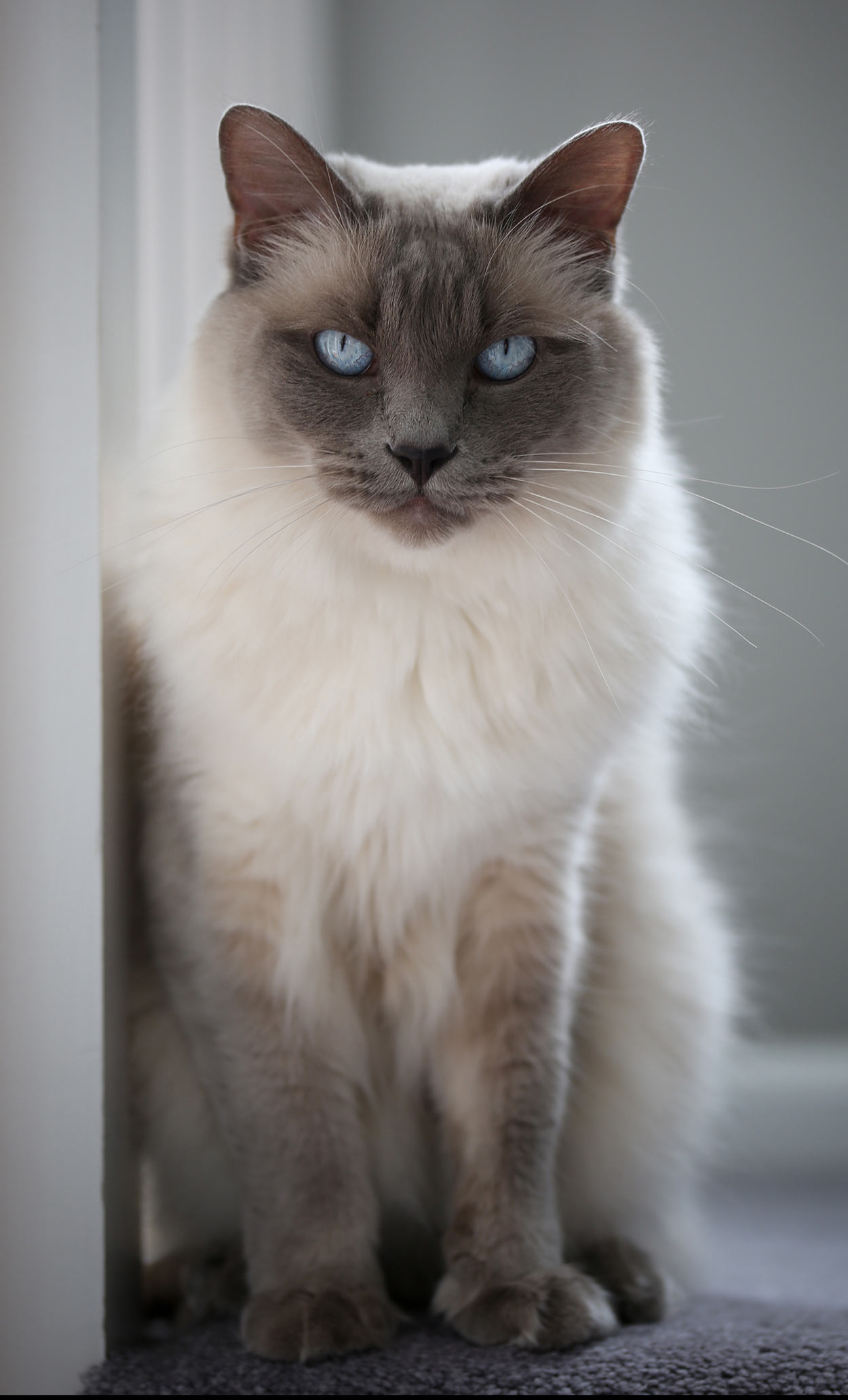
The Balinese is a long-haired breed of domestic cat with Siamese-style point coloration and sapphire-blue eyes. The Balinese is a naturally occurring mutation of the Siamese breed. The long hair gene is recessive, and may remain hidden in a Siamese bloodline for generations before it manifests. Balinese cats are very vocal, playful, and social, similar to their Siamese ancestors. They are one of the least allergenic cat breeds.
Characteristics
Scores describe general breed tendencies, not an individual animal. A higher score means more of the named trait or need; it does not always mean better.
Life with a Balinese
Origin
| Origin | United States |
| Group | Semi-Longhair |
For the breed’s history, see the reference sources and Wikipedia link below.
Size and coat
| Weight | 3–5 kg |
| Lifespan | 18–22 years |
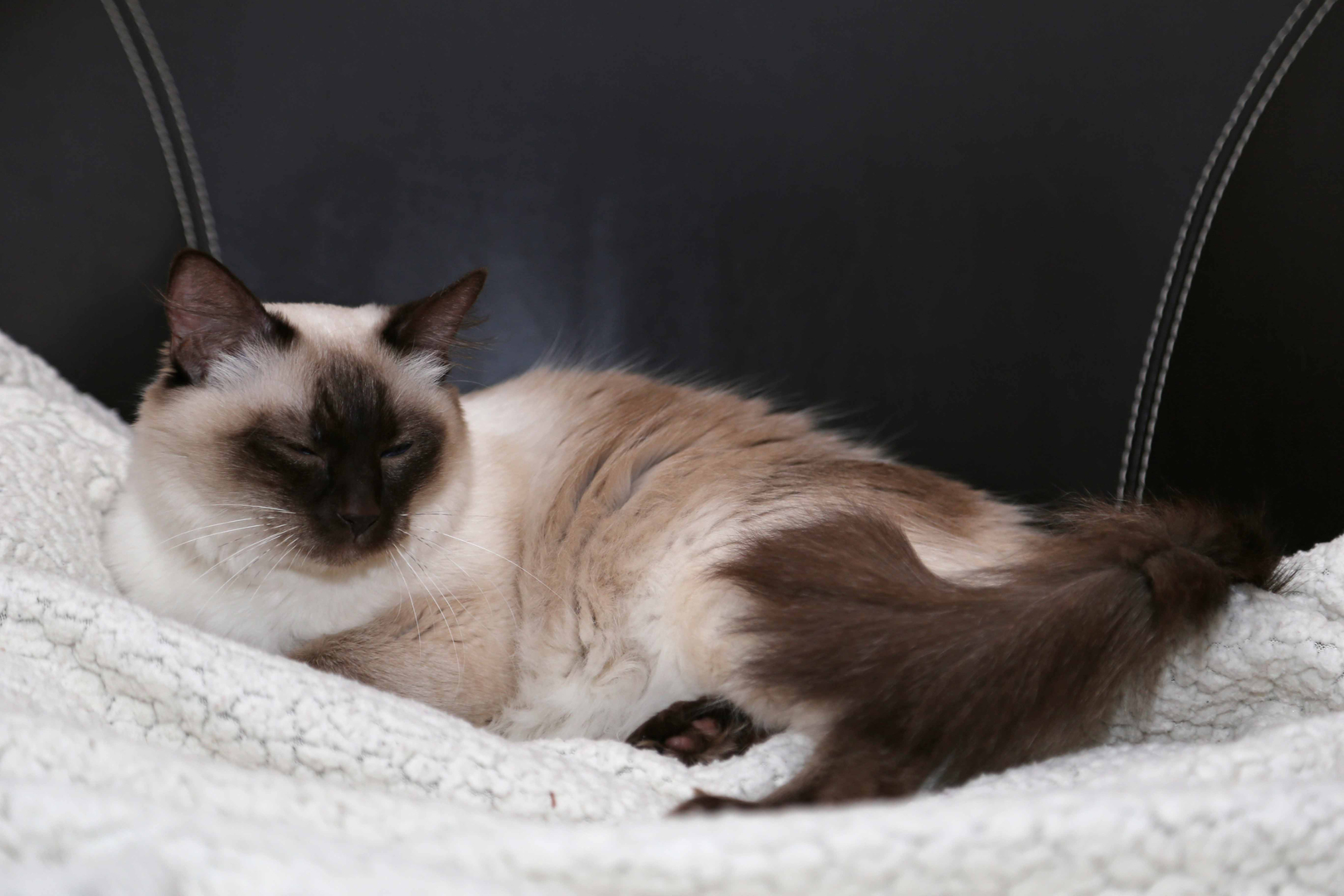
| Colors & Patterns | Seal Point · Blue Point · Chocolate Point · Lilac Point |
These are approximate adult ranges. Individual animals may be smaller or larger.
Temperament
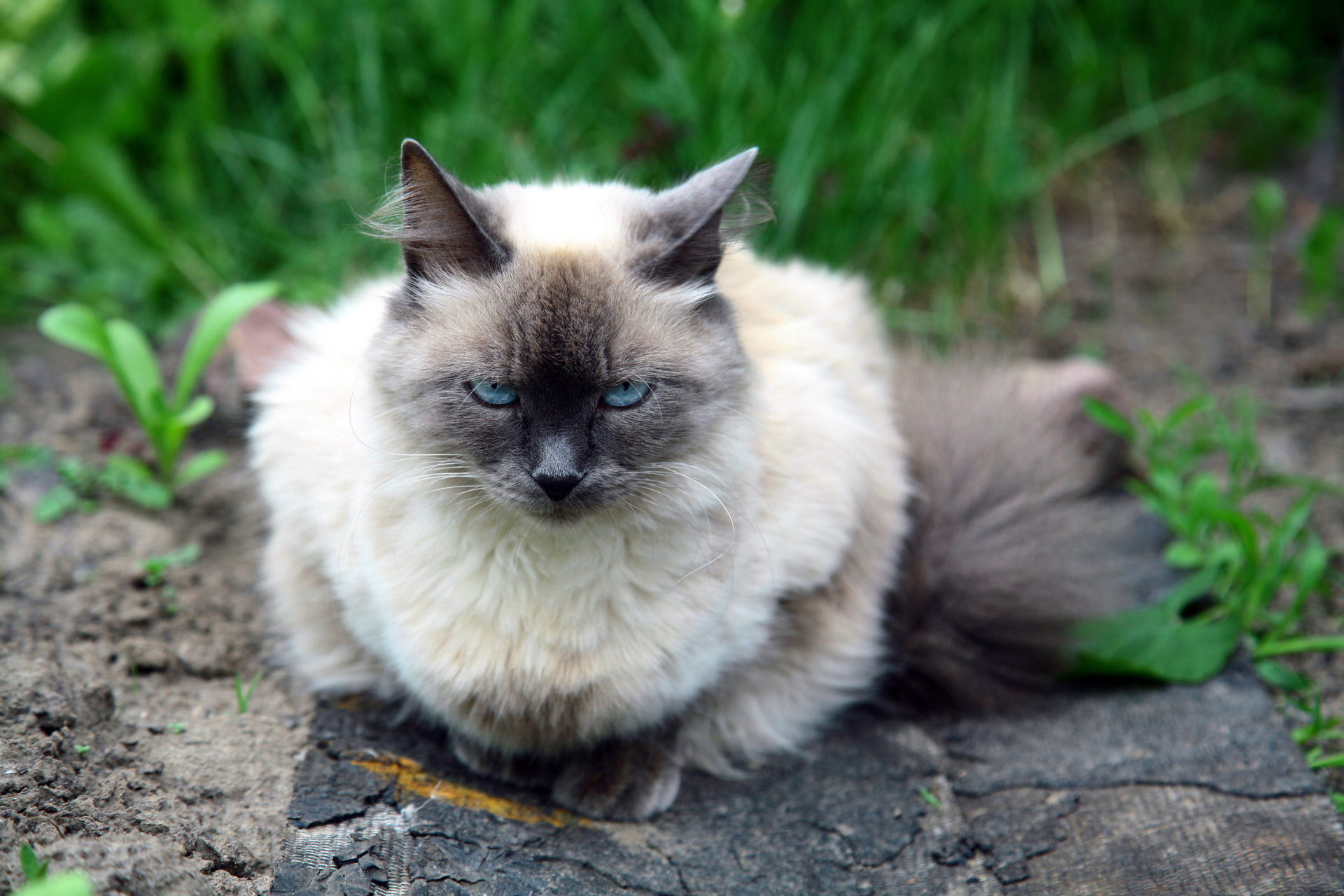
| Personality | Intelligent · Social · Playful · Vocal · Affectionate |
Usually active. Make time for play, exercise, and activities that keep it interested.
Often seeks company and attention. Allow time together and help it get used to short periods alone.
Coat care
Usually needs relatively little coat care. Brush as needed for its coat and shedding.
Usually sheds relatively little. Low shedding does not mean an animal cannot cause allergies.
Living together
Often adjusts to changes fairly well, though a gradual introduction still helps.
Often gets along with children, but an adult should still supervise their time together.
Often gets along with other pets. Introduce them gradually rather than assuming they will be friends.
Health and lifespan
A lifespan range is not a prediction for an individual animal. Breed scores cannot diagnose illness or replace a veterinary assessment.
Offer places to climb, hide, scratch, and rest. Try different toys to see what your cat enjoys.
More from breed and care sources
Excerpts from the linked sources. Read the original for full details.
About the Breed
Soften a Siamese with a longer, silkier coat and presto—you have a Balinese! These svelte, elegant creatures are the perfect compromise for those who are attracted to the outgoing, interactive personality of the Siamese but prefer a slightly less vocal companion. Breeders and pet owners agree that Balinese are somewhat less talkative than Siamese and possess softer voices. Do not think for a minute, though, that this means they are quiet cats. Ongoing conversation is the norm, and it may range from a comforting purr to an occasional wail of protest that you are not providing them with enough attention!
Breed History
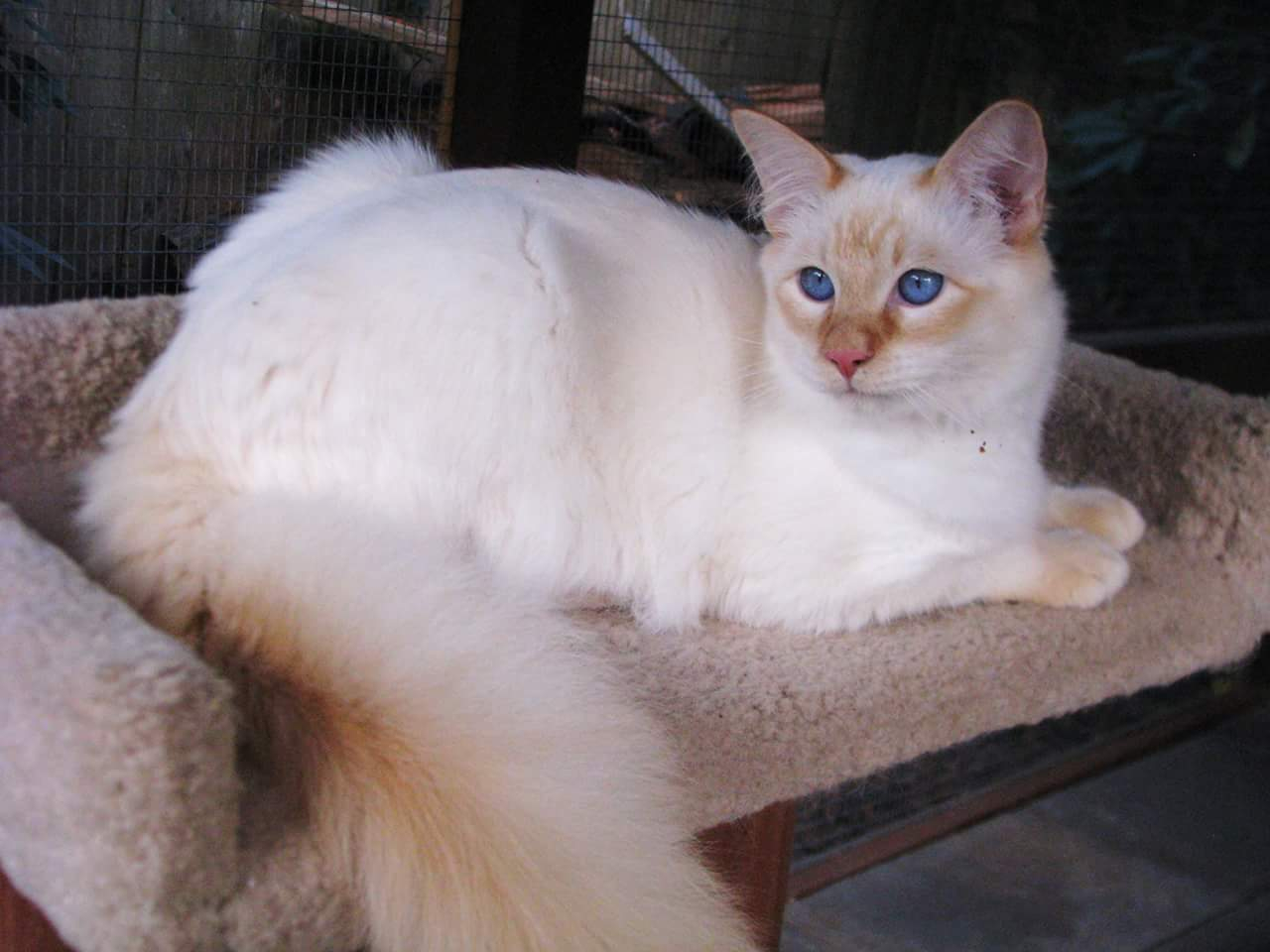
Since the long-haired gene is recessive, long-haired kittens were known to occur in Siamese litters as far back as the early 1900s. They were quickly placed in pet homes. However, in the 1940s, two Siamese breeders, Helen Smith (Merry Mews cattery) and Sylvia Holland (Holland’s Farm cattery) began working to develop the Balinese as a separate breed. The name was chosen to reflect the graceful movements of Balinese dancers. Accepted for CFA Championship competition in 1970, “Balis” were first recognized only in the four traditional Siamese colors: seal, chocolate, blue and lilac. Lynx points, tortie points and other “non-traditional” Siamese colors were accepted in 1979 under the name of Javanese. In 2008, CFA breeders voted to merge the two into a single breed with separate divisions.
Character & Temperament
Any Balinese owner will tell you that these cats are not only as intelligent as people, they believe they ARE people! This explains their eagerness to provide assistance with all of your daily activities, to sleep under the covers with you, and, if not properly discouraged, to eat dinner off your plate. They easily learn to play fetch and will retrieve toys until you are tired of throwing them, then figure out how to open the drawer where you hid the toy and start the game all over again. Despite their regal bearing and aristocratic appearance, every Balinese has a bit of a clown hiding inside. This accounts for their love of play; however, just when you think your Balinese is going to go on playing forever, it will curl up in your lap and go to sleep. Alert, affectionate and always curious, they appear to be quite fond of dogs and will become devoted members of any family. Older children may be better able to keep up with their high activity level than very young ones.
Physical Appearance
Some say the breed’s most distinctive feature is the close-lying, finely spun coat, which lightly covers the lithe, muscular body without obscuring the elegant, refined structure. The coat flows along the body into a proudly plumed tail, and should never appear thick. But then there are those intense, sapphire-blue eyes that sparkle with intelligence, and those dramatic ears, wide at the base and continuing the triangular line of the wedge-shaped head. Put all these features together and you have an exquisite, elegant cat that elevates its Siamese foundations to a new level of feline beauty.
Grooming
Balinese are single-coated cats; with no downy undercoat, they are not susceptible to mats and extremely easy to care for. Combing or brushing several times a month is recommended to control shedding. Occasionally, the natural oils in the coat will cause some cats to appear greasy; this means a quick bath is in order. Be sure to use a gentle shampoo specifically formulated for cats and rinse well. Blow drying is not necessary, simply confine the cat in a warm area of your home and allow it to air dry.
Life at home
Although Balinese are generally healthy, they can be predisposed to certain health conditions that date back to their Siamese ancestors. Some are minor, such as crossed eyes or tail kinks, others require genetic or physical testing to assess. Fortunately, most breeders now practice genetic screening to remove carrier cats from their breeding programs and strengthen the breed’s gene pool for the future. Breeders also typically recommend purchasing a pet insurance policy; CFA now offers a free 30-day trial policy with kitten registration.
Breed Overview
A longhaired variety of the Siamese cat, Balinese cats are renowned for their silky fur and stunning blue eyes. But it's the breed's playful personality and uncanny ability to comfort their humans when they're feeling down that has long made them a popular family pet. That said, they’re a talkative bunch and tend to ask for a lot of attention, so they shouldn’t be left alone for long periods of time. Balinese cats are happy living in apartments or houses as long as they have plenty of cat furniture to climb, scratch, and pounce on.
Care Guide
As a long-haired Siamese cat, the Balinese is selectively bred to share the Siamese’s beloved personality, but with a long coat and full plume tail. Much like their parent breed, Balinese cats are adored for their good humor, good nature, and high energy. They’re most content when being loved by a human. According to the Governing Council of the Cat Fancy, the long hair of the Balinese is easy to care for, requiring only a weekly combing to remove loose hairs. They’re medium-size, weighing 5–8 pounds, and are known to live into their 20s.