Origin
United States
Lifespan
12–16 years
Weight
4–7 kg
Group
Shorthair
Personality
Colors & Patterns
Brown Spotted Tabby · Brown Marbled Tabby · Silver Spotted · Snow Spotted
Bengal
About This Breed
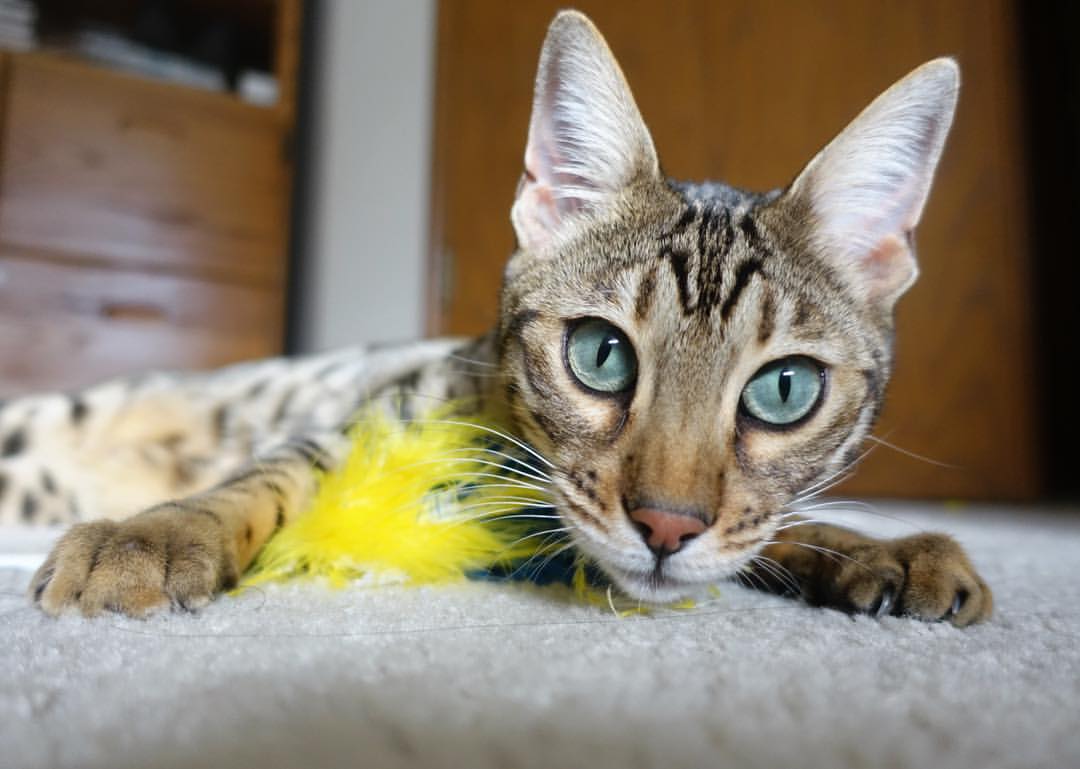
The Bengal cat is a domesticated cat breed created from hybrids of domestic cats, especially the spotted Egyptian Mau, with the Asian leopard cat. The breed name comes from the leopard cat's taxonomic name. Bengals have a wild appearance with large spots, rosettes, and a light-coloured belly. Known for their love of water, climbing, and highly active, playful personalities, they are one of the most energetic cat breeds.
Characteristics
Scores describe general breed tendencies, not an individual animal. A higher score means more of the named trait or need; it does not always mean better.
Life with a Bengal
Origin
| Origin | United States |
| Group | Shorthair |
For the breed’s history, see the reference sources and Wikipedia link below.
Size and coat
| Weight | 4–7 kg |
| Lifespan | 12–16 years |
| Colors & Patterns | Brown Spotted Tabby · Brown Marbled Tabby · Silver Spotted · Snow Spotted |
These are approximate adult ranges. Individual animals may be smaller or larger.
Temperament
| Personality | Active · Playful · Curious · Intelligent · Energetic |
Usually active. Make time for play, exercise, and activities that keep it interested.
Often seeks company and attention. Allow time together and help it get used to short periods alone.
Coat care
Usually needs relatively little coat care. Brush as needed for its coat and shedding.
Usually sheds relatively little. Low shedding does not mean an animal cannot cause allergies.
Living together
Often adjusts to changes fairly well, though a gradual introduction still helps.
Often gets along with children, but an adult should still supervise their time together.
Often gets along with other pets. Introduce them gradually rather than assuming they will be friends.
Health and lifespan
A lifespan range is not a prediction for an individual animal. Breed scores cannot diagnose illness or replace a veterinary assessment.
Offer places to climb, hide, scratch, and rest. Try different toys to see what your cat enjoys.
More from breed and care sources
Excerpts from the linked sources. Read the original for full details.
About the Breed
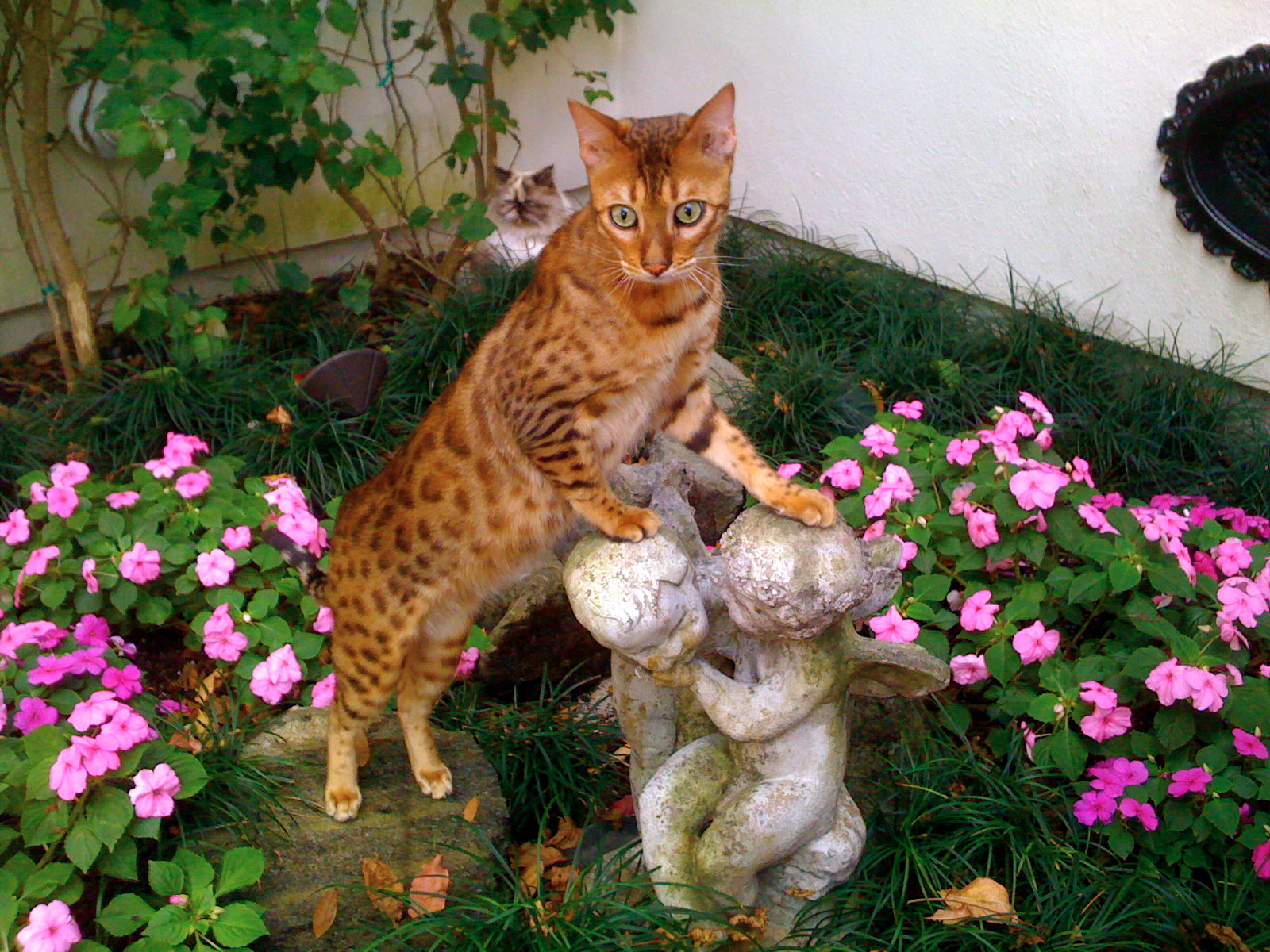
To most cat lovers, spots spell “wild” and spotted cats command attention. While there are other spotted breeds, only the Bengal takes spots one step further, sporting dramatic rosettes with dark outlines for a look like no other breed. Although actually descended from a wild ancestor, these exotic-looking felines boast many generations of careful breeding dedicated to replicating the look of a wild cat, paired with a sweet personality. Throughout the development of the breed, selecting for the best temperaments has been top priority. Consequently, today’s Bengal is a remarkably beautiful animal that is as playful and loving a companion as anyone could want. It also offers a veritable rainbow of colors and patterns to choose from.
Breed History
Two unrelated goals gave birth to the Bengal breed. In 1963, conservationist Jean Mill, who was working to preserve a small arboreal wildcat known as the Asian Leopard Cat, crossed a black domestic tom with a female Asian. Meanwhile, Dr. Willard Centerwall was beginning a breeding program to produce similar crosses, seeking to produce a domestic cat with the Asian’s natural immunity to feline leukemia. Mill went on to obtain breeding cats from Centerwall and used them, along with spotted domestic cats, to develop the Bengal breed. She eventually produced sweet-tempered cats that were five generations out from the original wildcats. The new breed was gradually recognized throughout the cat fancy; it became extremely popular in the show ring and as a pet. CFA accepted Bengals for registration in 2016, requiring five generations of pure domestic ancestry. They were advanced to championship status in 2018.
Character & Temperament
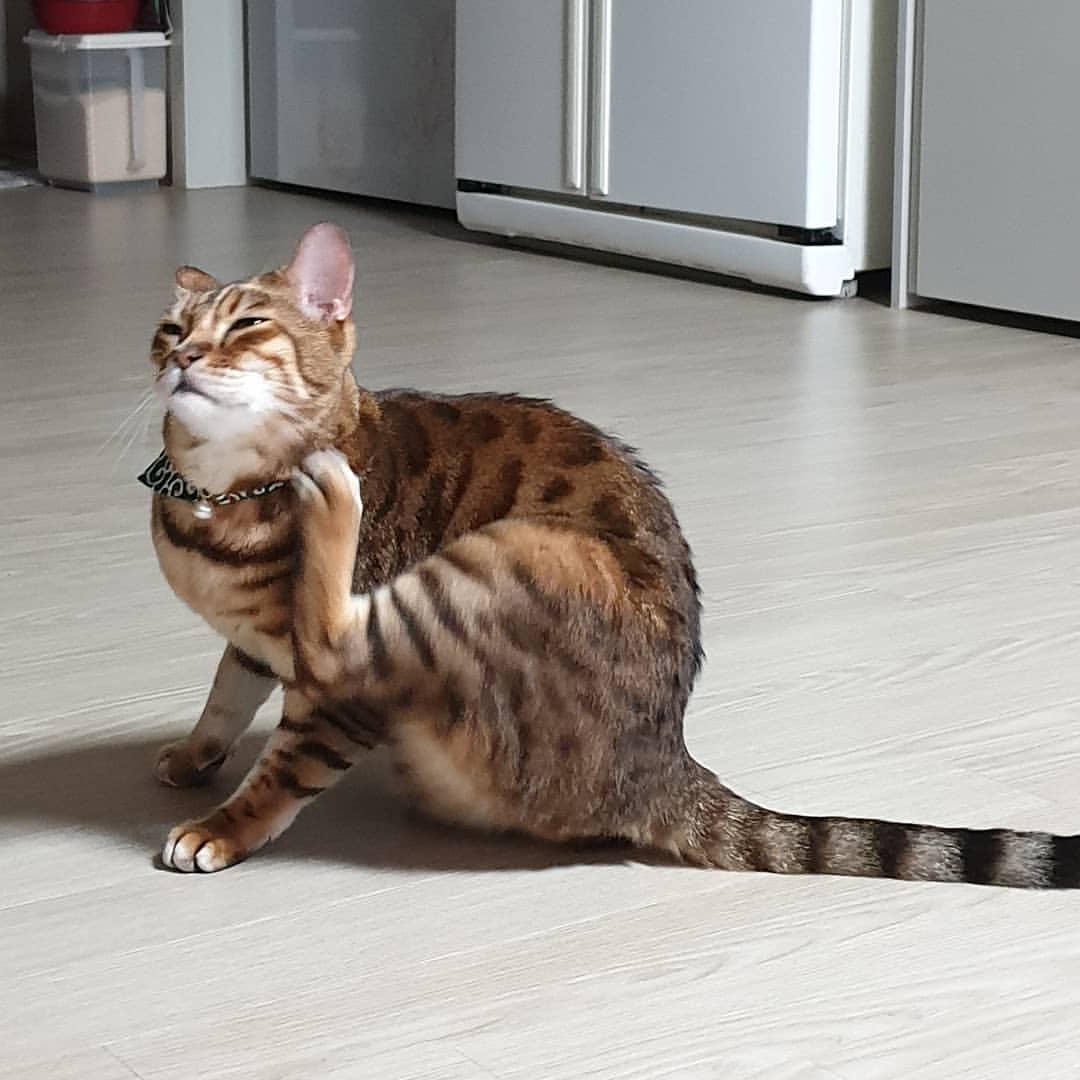
Confident, curious, and athletic, Bengals are extremely intelligent and maintain a kitten-like energy and attitude well into their senior years. They are fascinated by water and may enjoy watching you brush your teeth, or even try to join you in the shower. Easy-going and affectionate, they are quite trainable and often learn to do tricks. Many enjoy going for walks with a harness and leash. Bengals are often considered to be quite talkative, but this is not necessarily true of every Bengal. There is a great deal of variation from one cat to the next, with some choosing to engage in frequent conversation and others preferring to keep their thoughts to themselves. When properly introduced, they get along well with other pets and enjoy being part of a family; in addition, their inquisitive and affectionate nature makes them a good choice for families with children.
Physical Appearance
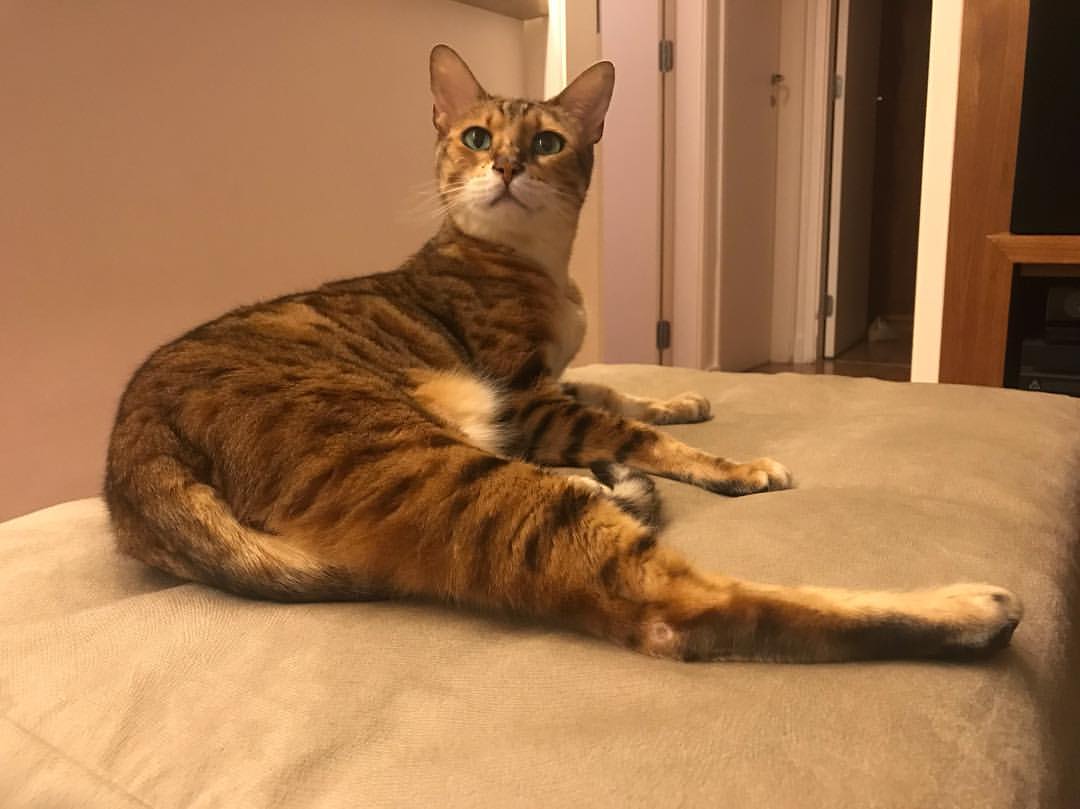
Watching the muscular, powerful body of a Bengal in action is like watching poetry in motion; they combine elegance and grace with athletic prowess. However, many find the unique head structure to be most striking, with its distinctive facial markings, large, luminous, eyes, wide nose, and prominent whisker pads. The ears are small to medium, which emphasizes the eyes and further contributes to the wild look. The most recognized color and pattern is the brown spotted or rosetted tabby, but Bengals are also found in a marbled pattern, which is based on the classic tabby pattern but has more dramatic, less symmetrical, markings with dark outlines, rich inner color and speckles. Some Bengals have “glitter,” a sparkle visible at the tips of the hairs when the light catches it.
Grooming
The coat texture of a Bengal has to be experienced to be believed. It is incredibly soft and silky, unlikely to mat, and does not shed heavily, especially in comparison to other shorthair breeds. Grooming once a week is recommended, using a soft-bristled brush, in order to condition the coat, remove dead hair, and keep your Bengal looking its best. Bathing should not be necessary unless you plan to show the cat; in this case, contact your breeder for product recommendations and bathing procedure.
Life at home
Genetic testing has enabled Bengal breeders to screen cats for a number of heritable diseases that may occur in the breed and remove carrier cats from the breeding program. However, hypertrophic cardiomyopathy, the most commonly seen heart issue in cats, requires an echocardiogram to detect. Most breeders have their breeding cats scanned by a cardiologist prior to producing the first litter and repeat it at regular intervals afterward. Clearly, this dedication to regular screening is enabling Bengal breeders to build a diverse and healthy gene pool.
Breed Overview
When you look at a Bengal cat, you might mistake them for a mini leopard—and you wouldn’t be far off. “A Bengal is a beautiful cross between a domestic shorthair and an Asian leopard cat,” says Jennifer Frione, DVM, owner of Lakeside Animal Hospital in Plantation, Florida. While Bengals are wild at heart, their curiosity and athleticism make them beloved companions for the experienced cat parent. As with the similarly exotic Savannah cat, before setting your sights on this leopard lookalike, you’ll need to check your local and state regulations.
Care Guide
Bengal cats are classified by “F” followed by a number. That’s their filial rating, or how many generations the cat is removed from the initial cross. Therefore, F1 means a Bengal kitten is the first cross between a wild leopard cat and a domestic cat—a “low” generation. As the generations progress into F2 and beyond, the cats become smaller and more similar in personality to domestic cats, while retaining their spotted appearance. Even if your state allows F1 Bengal cats, Frione recommends that pet parents consider purchasing high-generation Bengals, because low-generation cats (F1 Bengals) are most like their wild leopard cat ancestors. Before setting your sights on this leopard lookalike, you’ll need to check your local and state regulations. Some U.S. states ban Bengal cats, while others permit them outside of urban areas if your cat is of a later generation.