Origin
United Kingdom
Lifespan
11–15 years
Weight
2–4 kg
Group
Rex / Curly
Personality
Colors & Patterns
Various Colors and Patterns
Cornish Rex
About This Breed
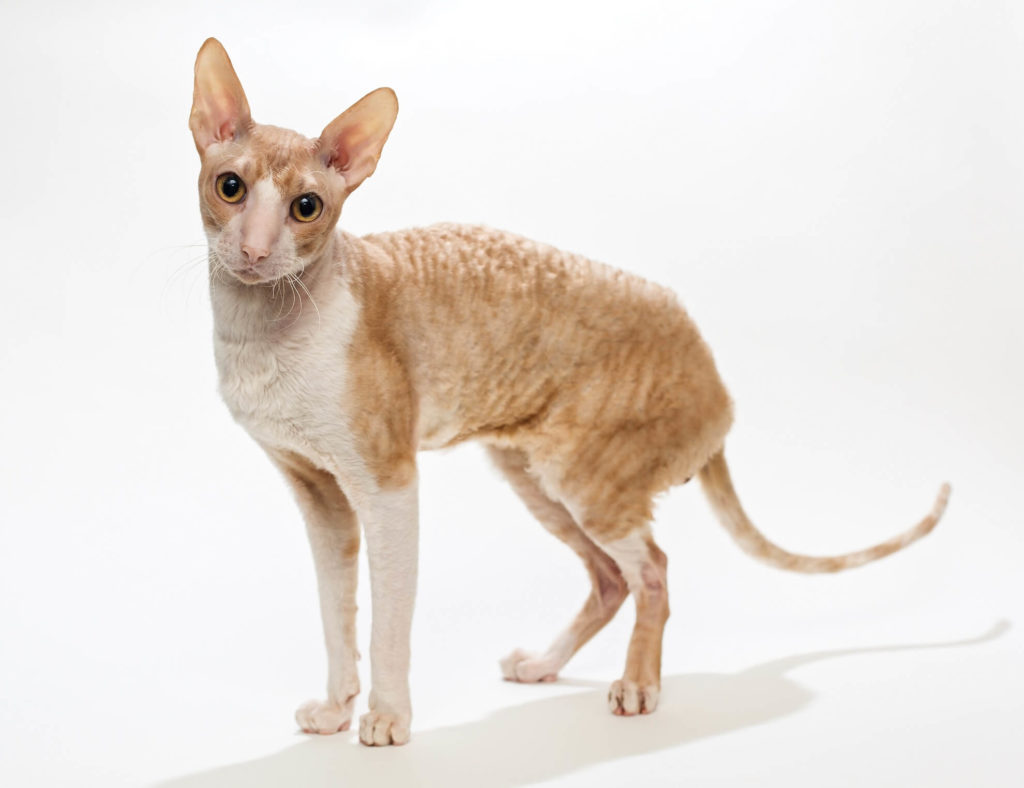
The Cornish Rex is a breed of domestic cat. The Cornish Rex has no hair except for down. Most cats have three types of hair in their coats: the outer fur, the middle layer, and the undercoat (down). The Cornish Rex only has the undercoat, which is very soft and wavy. The breed originated from a natural spontaneous mutation in Cornwall, England in 1950. They are highly active, agile cats often compared to greyhounds in terms of their lean physique.
Characteristics
Scores describe general breed tendencies, not an individual animal. A higher score means more of the named trait or need; it does not always mean better.
Life with a Cornish Rex
Origin
| Origin | United Kingdom |
| Group | Rex / Curly |
For the breed’s history, see the reference sources and Wikipedia link below.
Size and coat
| Weight | 2–4 kg |
| Lifespan | 11–15 years |
| Colors & Patterns | Various Colors and Patterns |
These are approximate adult ranges. Individual animals may be smaller or larger.
Temperament
| Personality | Active · Social · Curious · Playful · Energetic |
Usually active. Make time for play, exercise, and activities that keep it interested.
Often seeks company and attention. Allow time together and help it get used to short periods alone.
Coat care
Usually needs relatively little coat care. Brush as needed for its coat and shedding.
Usually sheds relatively little. Low shedding does not mean an animal cannot cause allergies.
Living together
Often adjusts to changes fairly well, though a gradual introduction still helps.
Often gets along with children, but an adult should still supervise their time together.
Often gets along with other pets. Introduce them gradually rather than assuming they will be friends.
Health and lifespan
A lifespan range is not a prediction for an individual animal. Breed scores cannot diagnose illness or replace a veterinary assessment.
Offer places to climb, hide, scratch, and rest. Try different toys to see what your cat enjoys.
More from breed and care sources
Excerpts from the linked sources. Read the original for full details.
About the Breed
Imagine the racy elegance of a greyhound paired with playful personality of a clown – then dress it up in curls! You’ll have captured the essence of the Cornish Rex, one of the most unusual and charming felines to ever enchant cat lovers. Their unique marcel-waved coats are simple to care for and prone to only minimal shedding, which helps make this breed especially compatible with today’s busy lifestyles. Active, alert, and insistent on sharing every aspect of your life, you can expect a Cornish Rex to take firm possession of your heart and refuse to give it back.
Breed History
The breed’s distinctive coat is a mutation that began in Cornwall, England in 1950. When a curly-coated cream male kitten turned up in a litter of barn cats on Nina Ennismore’s farm, she recognized him as something special. After consulting her vet and a noted geneticist, she bred the kitten, Kallibunker, back to his mother, producing two more curly-coated kittens. Having had experience with Rex rabbits, Mrs. Ennismore decided to use the same name for her new breed of cat. Breedings with Burmese, Siamese, and British Shorthairs established that the mutation was recessive while building a diverse foundation for the new breed. A California breeder purchased a pair from Mrs. Ennismore in 1956 to establish the breed (now called the Cornish Rex) in the U.S. It was accepted for CFA registration in 1962 and achieved Championship status two years later.
Character & Temperament
Today’s “Corneys” are not only extremely intelligent, but adaptable, adventurous and love to travel. However, they are also devoted to their people and are often called “Velcro kitties” because of their need to maintain physical contact with that special person. Given their exuberant natures and high activity levels, they are in constant search of new things to play with … which may not actually be appropriate things for them to play with! Owning a Cornish Rex calls for thoroughly child proofing the house and keeping fragile objects behind closed doors. Cornish Rex antics will amuse children and adults alike, and dogs will find them ready playmates. When your Cornish Rex is not seeking attention, providing affection, or engaged in play, it is most likely looking for food. Despite their slim builds and fine bones, these cats have enormous appetites and will often consume vegetables, fruits and other edibles unlikely to appeal to most cats. They will engage in conversation but are not given to unnecessary or loud vocalizing. Why talk when there are things to be played with?
Physical Appearance
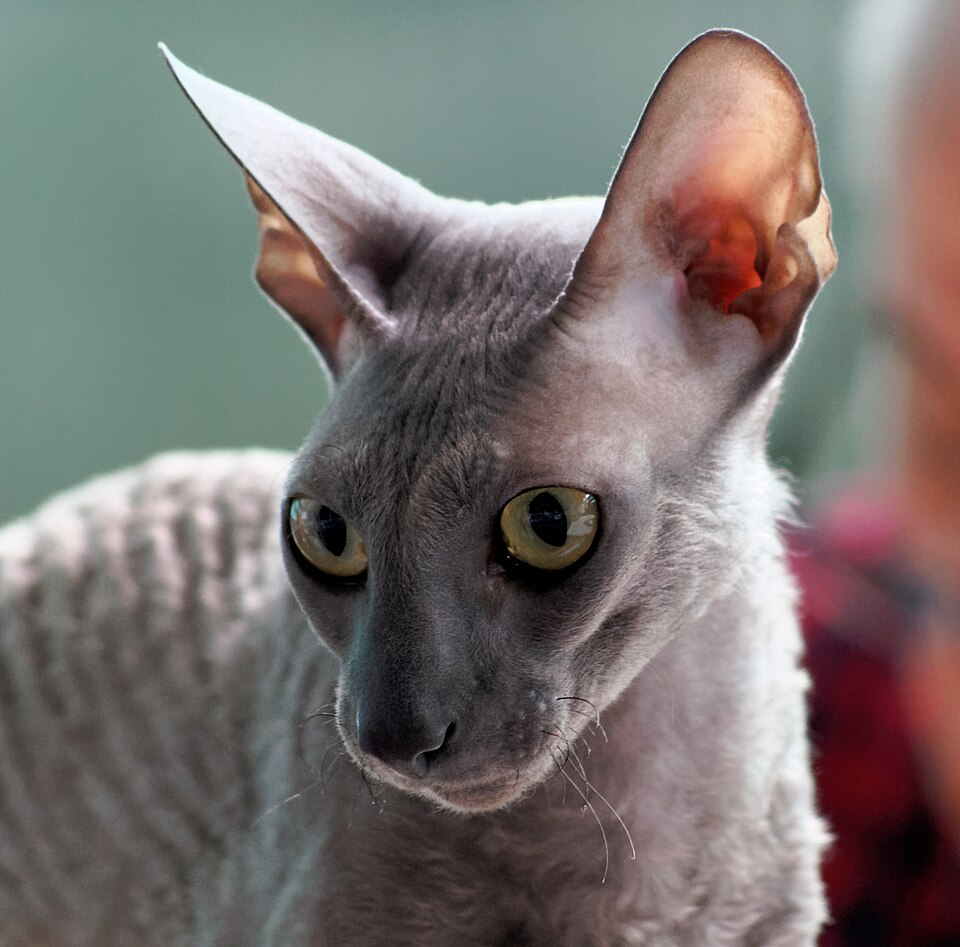
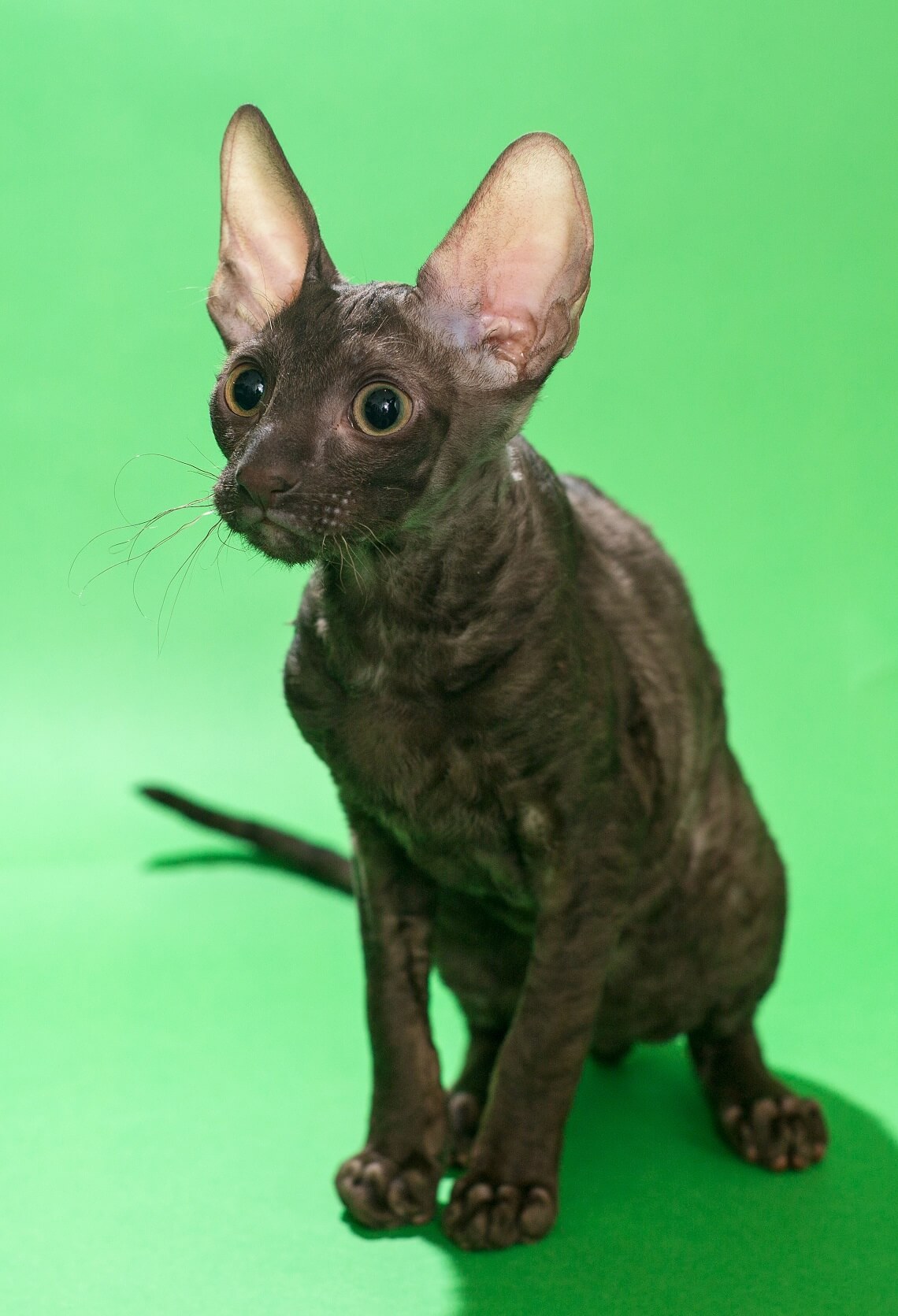
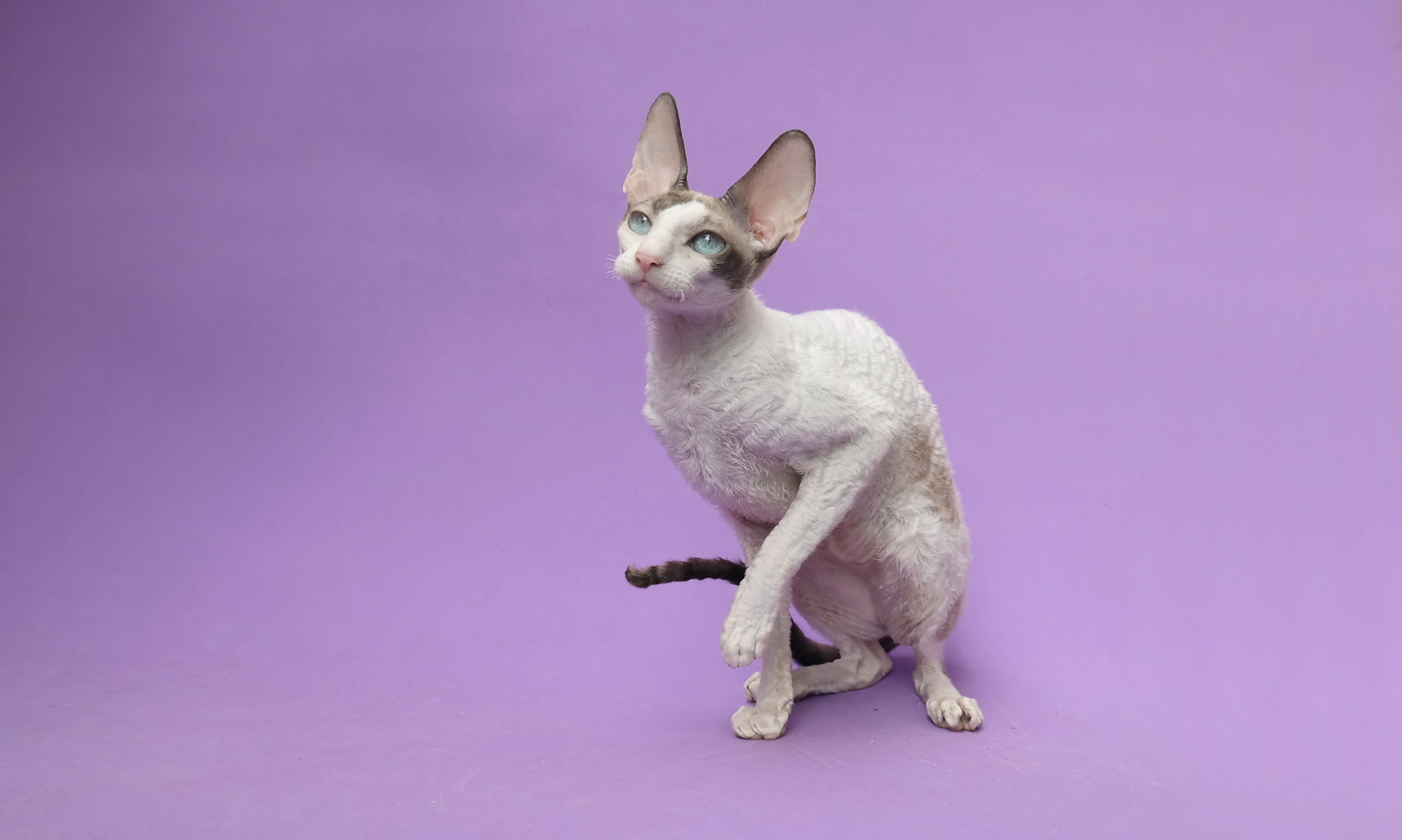
Short, close-lying, and covered with tight marcel waves, the coat of a Cornish Rex has always been its defining feature. But it’s not just about the curl. The coat is completely lacking in guard hairs, giving it an unbelievably soft, silky texture. It must also feel dense to the touch; the breed standard assigns 40 points alone to the coat and requires density and softness as well as curl. Lean and statuesque, with its arched back, egg-shaped head, large high-set ears, huge luminous eyes, and prominent Roman nose, the Cornish Rex can never be mistaken for any other breed.
Grooming
Because of the nature of the coat, regular combing is not needed. It is, however, important to pay attention to the ears, which may accumulate waxy buildup more quickly than other breeds and should be cleaned often with a cotton ball or Q-tip. Bathing may be needed occasionally as some cats may become greasy over time. These are true “wash-and-wear” cats, needing only a good shampoo and a thorough towel dry. (Never use a blow dryer, it will ruin the curls!)
Life at home
Popular since their advent in the U.S., Cornish Rex are also bred in Europe and Asia. This is a sturdy, vigorous breed with no inherited health issues, but do note that the lack of guard hairs makes the coat fragile and it may not provide sufficient protection from the sun (yes, cats can get sunburned). Additionally, these cats are easily chilled in cold weather, so you may want to provide yours with a sweater.
Breed Overview
It’s easy to see why the Cornish Rex turns heads: The breed’s short and curly or wavy coats, angular faces, high cheekbones, and large ears stand out from other cats. Their athletic build and kitten-like energy also earn them the nickname "Greyhound of the cat world," says Mark Kantrowitz, a champion cat fancier of Cornish Rex cats. These curly-haired cuties can grow to be 6–10 pounds and 8–12 inches at the shoulders. Caring for a Cornish Rex Most cats have three layers of fur to keep them warm: A thick outer layer of guard hairs, a middle layer of awn hairs, and a soft and fine inner layer of down, says Lisa Kuta, co-founder of Cornish Rex Friends, a national Cornish Rex rescue.
Care Guide
Most cats have three layers of fur to keep them warm: A thick outer layer of guard hairs, a middle layer of awn hairs, and a soft and fine inner layer of down, says Lisa Kuta, co-founder of Cornish Rex Friends, a national Cornish Rex rescue. But not Cornish Rexes. Due to a genetic mutation, they only have the down layer, giving them the feel of cashmere and rows of curls called a marcel wave. But don't be fooled by the Cornish Rex's low-shedding coat—they aren't completely hypoallergenic cats. The protein that triggers allergies in humans is found in their skin, fur, and saliva, so no cat is truly allergy-free. But the good news is that because the Cornish Rex has less fur than other breeds, they may be a better choice for those with mild to moderate cat allergies. If you’re interested in bringing home a rex cat, keep in mind that each feline in the Rex cat breed family, which includes the Cornish Rex, Devon Rex, and Selkirk Rex, is unrelated. While they all have a curly coat trait, each is a different breed that developed independently from spontaneous mutations.