Origin
Japan
Lifespan
15–18 years
Weight
3–5 kg
Group
Shorthair
Personality
Colors & Patterns
White · Black · Red · Tricolor (Mi-Ke) · Tabby
Japanese Bobtail
About This Breed
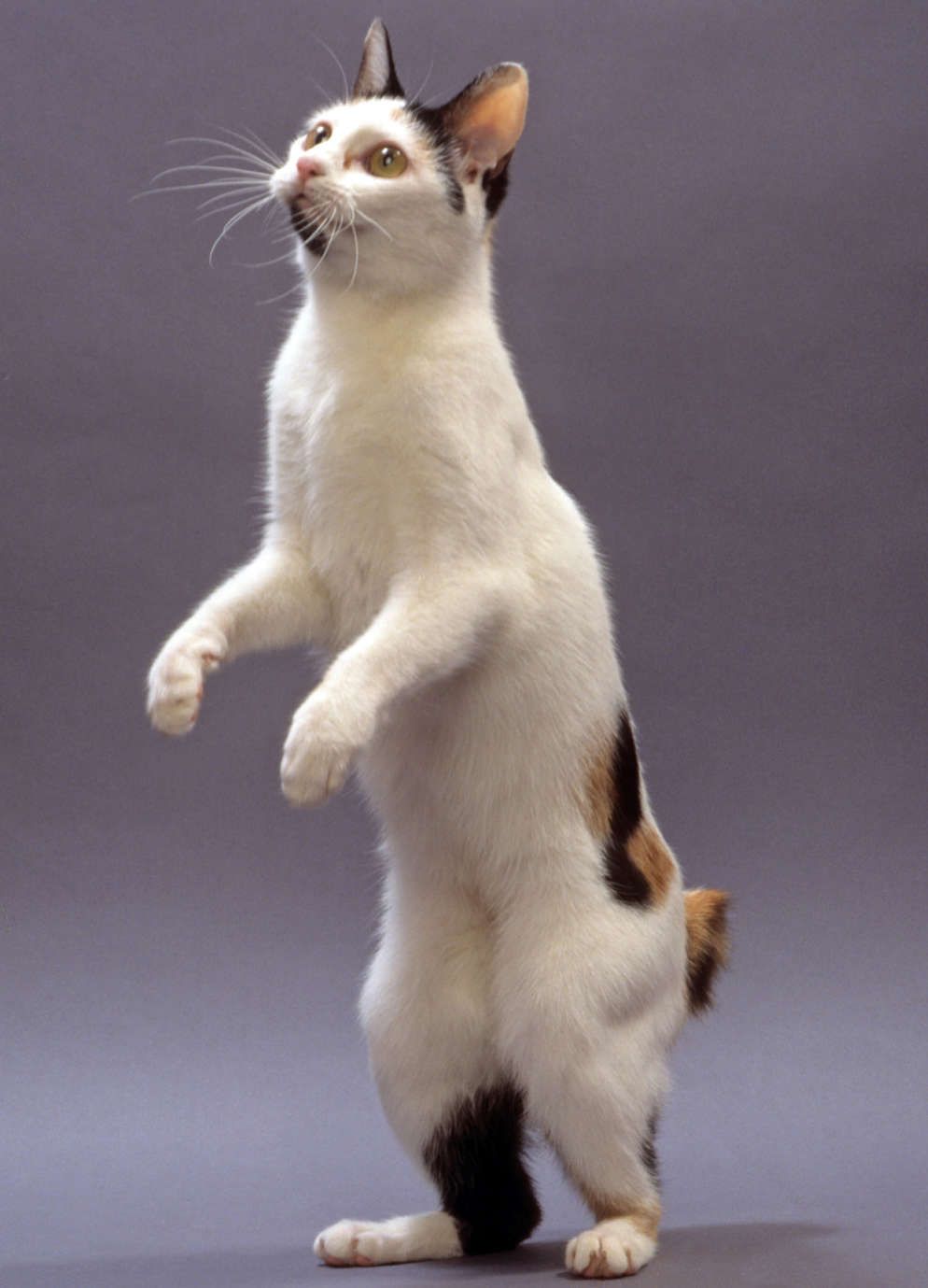
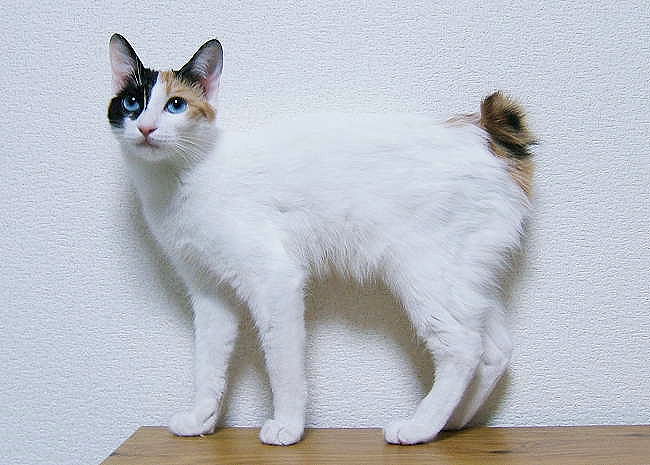
The Japanese Bobtail is a breed of domestic cat with an unusual bobtail more closely resembling the tail of a rabbit than other cats. The breed has been known in Japan for centuries, considered a symbol of good luck and prosperity. Its short tail is caused by a dominant gene that is not lethal even when homozygous. Japanese Bobtails are active, intelligent cats that tend to carry objects in their mouths and chirp rather than meow.
Characteristics
Scores describe general breed tendencies, not an individual animal. A higher score means more of the named trait or need; it does not always mean better.
Life with a Japanese Bobtail
Origin
| Origin | Japan |
| Group | Shorthair |
For the breed’s history, see the reference sources and Wikipedia link below.
Size and coat
| Weight | 3–5 kg |
| Lifespan | 15–18 years |
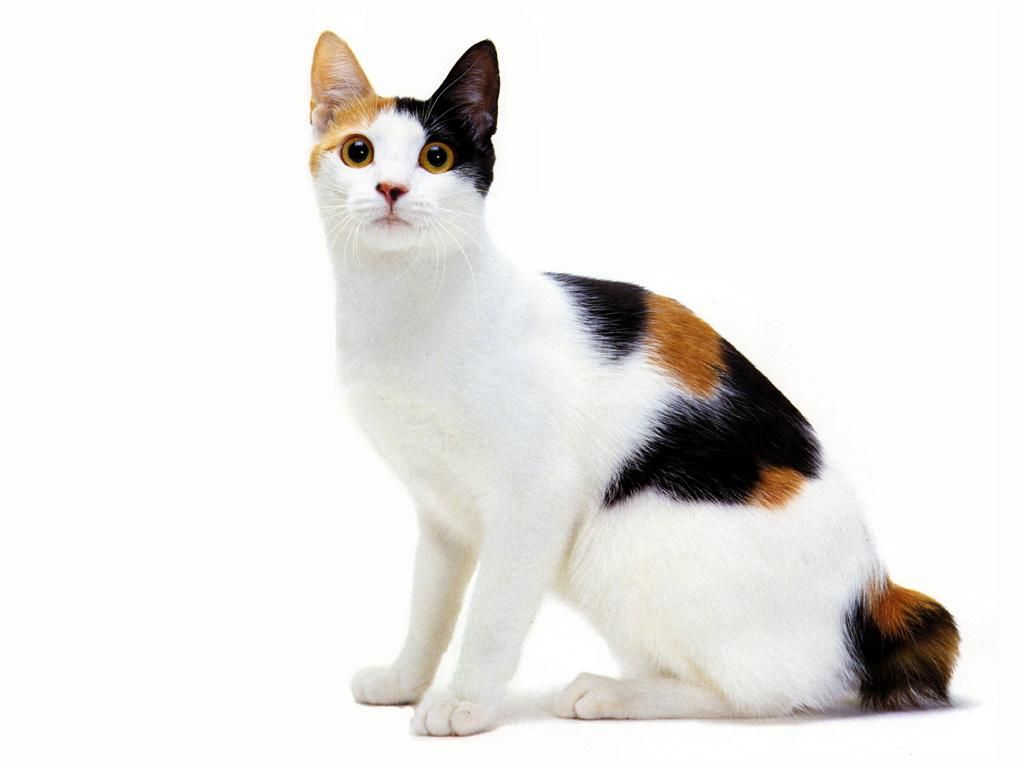
| Colors & Patterns | White · Black · Red · Tricolor (Mi-Ke) · Tabby |
These are approximate adult ranges. Individual animals may be smaller or larger.
Temperament
| Personality | Active · Intelligent · Friendly · Playful · Sweet |
Usually active. Make time for play, exercise, and activities that keep it interested.
Often seeks company and attention. Allow time together and help it get used to short periods alone.
Coat care
Usually needs relatively little coat care. Brush as needed for its coat and shedding.
Usually sheds relatively little. Low shedding does not mean an animal cannot cause allergies.
Living together
Often adjusts to changes fairly well, though a gradual introduction still helps.
Often gets along with children, but an adult should still supervise their time together.
Often gets along with other pets. Introduce them gradually rather than assuming they will be friends.
Health and lifespan
A lifespan range is not a prediction for an individual animal. Breed scores cannot diagnose illness or replace a veterinary assessment.
Offer places to climb, hide, scratch, and rest. Try different toys to see what your cat enjoys.
More from breed and care sources
Excerpts from the linked sources. Read the original for full details.
About the Breed
Imagine an exquisite piece of ancient Japanese art that sits in your lap and purrs! But probably not for long … these elegant, refined creatures are as active as they are beautiful. Often in motion but always interactive and affectionate, the Japanese Bobtail is one of the most endearing and entertaining of all feline companions. Once the pampered darlings of Japanese nobles, these cats are surprisingly self-sufficient and natural hunters. Every cat’s bobtail—due to a dominant gene and not the result of any cropping—is as unique as a fingerprint, and their powerful back legs allow them to jump to amazing heights, especially when motivated by a toy.
Breed History
Bobtails can be seen depicted in Japanese scrolls, prints and carvings dating back to the Middle Ages. They are thought to have been brought from Korea as far back as the sixth century. Their ownership was restricted to members of the court until 1602, when an imperial edict required all cats to be released into the streets. An infestation of vermin was threatening the silk industry, and the Bobtails did battle with the rodents and helped preserve the silkworms. In the process, they spread throughout the country, interbreeding with street cats until the dominant bobtail became part of the signature look of most Japanese cats. The first Japanese Bobtails were imported to the United States in 1968. Shorthairs achieved CFA Championship status in 1976 and the Longhair Bobtail followed in 1993.
Character & Temperament
Today’s Bobtails have the beauty and loving temperaments that so appealed to the imperial court plus the tenacity and independence that enabled them to rise to the challenge of their 16th-century exodus. You can see these qualities on display in the show ring as a Japanese Bobtail shows itself off to a judge, curls up with delight if its head is correctly scratched, or takes determined possession of one of the judge’s toys. Inquisitive, intelligent problem-solvers, Japanese Bobtails are playful, agile pets who excel at Feline Agility. With their high activity level and short attention span, Japanese Bobtails are a source of amusement as well as a loving family pet. They get along well with dogs and children of all ages, but other cats sometimes need extra time to get used to this new creature that seems to be lacking a tail. Bobtails require a fair amount of attention and interaction to thrive, and will ask for it if you do not provide enough. Their soft voices produce a variety of sounds, providing charming conversation without being noisy.
Physical Appearance
For showing, a Bobtail’s tail must be clearly visible and not extend more than three inches from the body. (Since the vertebrae are sometimes curled up, it may be actually longer.) Some tails are rigid, others more flexible and expressive, but all are sensitive and should always be handled with care. Top show cats have fine boning, long legs and large, upright ears, along with triangular heads that are as long as they are wide. The large, expressive eyes appear oval in shape and are set at a noticeable slant. When first introduced, Bobtails were most popular in bicolor or mi-ke (which means tricolor, or calico). However, since they are “street” cats all colors are accepted and seen in the show hall, including solids, tabbies, smokes, and pointed colors. For many years, shorthair Bobtails were most popular; lately, longhairs have received more attention, with one recently achieving CFA’s Best Cat.
Grooming
Bobtails have no undercoat and shed only minimally. Shorthair Bobtails couldn’t be easier to groom. Simply comb them several times a month with a flea comb to remove dead hair, encourage new coat growth and make the cat very happy indeed. Longhair Bobtails need to be combed more often, with a fine, long-tooth comb, but their coats do not tangle or mat. Be prepared to provide an occasional bath. Longhairs should be blow dried to keep the coat’s lovely windblown appearance
Life at home
There are no known abnormalities associated with this breed’s distinctive tail. Bobtails are a sturdy, natural breed with no specific health concerns. Since they are somewhat rare, it is important to breeders to maintain an appropriate level of diversity in the gene pool. To help address this, U.S. breeders in CFA have always been able to import Japanese street cats to add to their breeding programs. Genetic testing is also being used to help head off problems with potential breedings.