Origin
United States
Lifespan
12–15 years
Weight
3–6 kg
Group
Rex / Curly
Personality
Colors & Patterns
Roan (black and white coat)
Lykoi
About This Breed
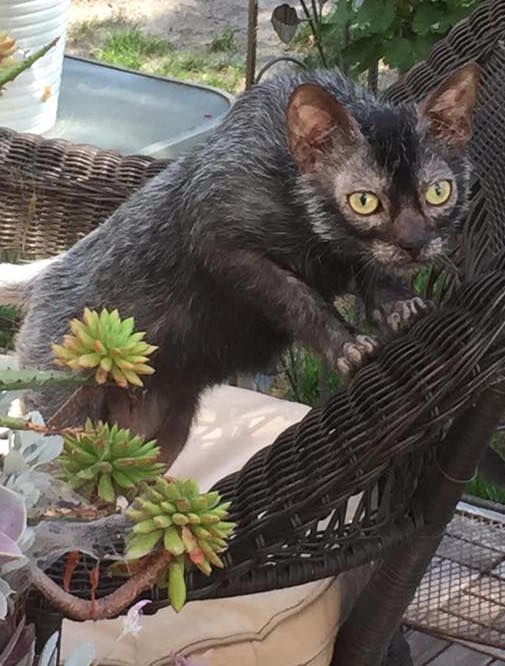
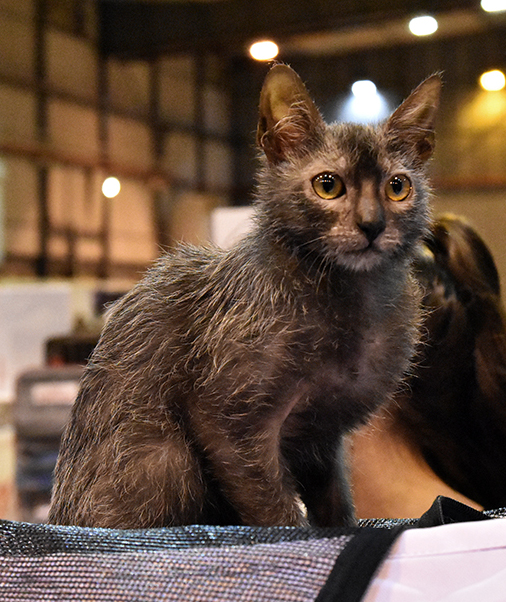
The Lykoi is a natural mutation of a domestic cat. The mutation has occurred in domestic cats for the last 20 years. The appearance of the Lykoi is often compared to a werewolf or a zombie cat. They have a distinctive roan coat pattern where black hairs are mixed with white or unpigmented hairs. Despite their somewhat spooky appearance, Lykoi cats are playful, loyal, and affectionate. They are known for intensely hunting toys and then flopping over for cuddles.
Characteristics
Scores describe general breed tendencies, not an individual animal. A higher score means more of the named trait or need; it does not always mean better.
Life with a Lykoi
Origin
| Origin | United States |
| Group | Rex / Curly |
For the breed’s history, see the reference sources and Wikipedia link below.
Size and coat
| Weight | 3–6 kg |
| Lifespan | 12–15 years |
| Colors & Patterns | Roan (black and white coat) |
These are approximate adult ranges. Individual animals may be smaller or larger.

Temperament
| Personality | Playful · Loyal · Affectionate · Curious · Active |
Usually active. Make time for play, exercise, and activities that keep it interested.
Often seeks company and attention. Allow time together and help it get used to short periods alone.
Coat care
Usually needs relatively little coat care. Brush as needed for its coat and shedding.
Some shedding is expected, and it may change with the season.
Living together
Often adjusts to changes fairly well, though a gradual introduction still helps.
Often gets along with children, but an adult should still supervise their time together.
Often gets along with other pets. Introduce them gradually rather than assuming they will be friends.
Health and lifespan
A lifespan range is not a prediction for an individual animal. Breed scores cannot diagnose illness or replace a veterinary assessment.
Offer places to climb, hide, scratch, and rest. Try different toys to see what your cat enjoys.
More from breed and care sources
Excerpts from the linked sources. Read the original for full details.
About the Breed
The excitement and fascination generated by the discovery of the Lykoi, or “werewolf” cat, has been unparalleled in the recent history of the cat fancy. So striking and unique, and so different from every other breed, the Lykoi often has people standing in long lines just for a look at it. Not a “designer breed” or any sort of hybrid, but the marvelous creation of Mother Nature herself, the Lykoi’s distinctive roan-patterned coat and eyecatching facial “mask” command attention, while its intelligent, interactive personality adds instant appeal.
Breed History
Discovered in Virginia in 2010, the first Lykoi were so unusual in appearance that at first, their health was questioned. Other cats with the same appearance were discovered in Tennessee the following year. After extensive medical and genetic testing, as well as test matings, the gene that produced the roan-patterned coat was found to be recessive and unrelated to any other mutation. On September 14, 2011, the first intentionally-bred Lykoi kitten, Daciana, was born. Subsequently, over 200 more Lykoi were produced through extensive outcrossing in order to minimize genetic inbreeding and to maintain the dramatic phenotype. CFA accepted the new breed for registration in 2018 and advanced it to championship status in 2023.
Character & Temperament
Lykoi are very active and curious cats who would generally rather hunt than cuddle. However, they thrive on human attention and interaction and will seek you out to insist on it. It’s amusing to watch a Lykoi at play, because they will patiently stalk their toys—and even “their” people—before making a sudden pounce. After that, well, don’t try too hard to get the toy back. You are unlikely to succeed. When new situations arise, your Lykoi may be somewhat reserved at first, and take a little time to acclimate to the new person or environment. However, they quickly warm up to new people and new pets, and once that happens, they are loyal and form strong bonds with both. Lykoi are not shy about expressing themselves, and have an extensive vocabulary of chirps, trills, purrs, and of course, meows, at their disposal to convey their thoughts and feelings, but they are not excessively vocal unless they feel neglected.
Physical Appearance
Lean, muscular, and graceful, Lykoi have large, bright, walnut-shaped eyes, tall, high-set ears, a leathery nose, rounded muzzle, and well-developed chin. The coat is the real attention-getter here, thanks to its unusual mix of white and colored guard hairs, sparsely coated face, legs, and feet, and a complete lack of undercoat. Although the coat has a rough appearance, it is surprisingly soft and silky to the touch. Kittens are born with coats that appear normal at birth, but in a week or two, the roaning pattern emerges. As the cat matures, it will undergo its own unique coat growth cycle, ranging from almost completely hairless to almost fully coated, and is likely to molt most of the coat at least once.
Grooming
Lykoi owners should expect to groom their cats on a regular basis but need not invest a lot of time in doing so; since there is no undercoat, shedding is minimal except during a molt. The skin of a Lykoi can become oily and require occasional bathing. If this happens, consult your breeder for product recommendations and bathing procedures as human shampoos should not be used on cats. Pay special attention to the ears and toes since these can become oily as well.
Life at home
The development of this breed has emphasized health and diversity from the very beginning, and been accompanied by extensive genetic testing. To date, no breed-specific health issues have been noted but the sparse nature of the coat requires some special precautions. Ingrown hairs may occur during a molt. In addition, the skin can be vulnerable to the sun, and over-exposure can accelerate molting. Try to control the amount of sunbathing your cat may do and consider using a pet-safe sunscreen on it. Because of the lack of undercoat, these cats will do best in a warm environment.
Breed Overview
The Lykoi (pronounced “lie-koi”) is a wild-at-heart cat who generally prefers to be busy embarking on self-assigned missions rather than lounging idly in a lap. Should you be fortunate enough to spot a Lykoi—they are quite rare—you could easily mistake them for a mini werewolf. In fact, “Lykoi” roughly translates to “wolf cat” in Greek. Sparsely furred bodies aside, Lykoi cats are similar to other small- to medium-size cat breeds in size and weight. They stand 8–10 inches tall and weigh 6–12 pounds.
Care Guide
The Lykoi is a partially hairless cat with a unique appearance that results from natural mutations. They have a roan coat pattern, which is a mixture of colored and white hairs on the body, with their face, tail, and legs mostly solid-colored. Their fur may look coarse, but it’s actually smooth. And because it grows in patches without an undercoat, Lykoi cats are soft to the touch. Dr. Antonio DeMarco, DVM, chief medical officer of GoodVets, has seen just one or two Lykoi cats in his practice spanning the past 15 years. He says these so-called “werewolf cats” get their partially hairless appearance from a genetic condition called hypotrichosis. Lykoi cats have a lower number of follicles per hair follicle group compared to normal house cats, he explains: “Essentially, it causes very thin hair.”