Origin
Russia
Lifespan
15–20 years
Weight
3–7 kg
Group
Shorthair
Personality
Colors & Patterns
Blue (Grey)
Russian Blue
About This Breed
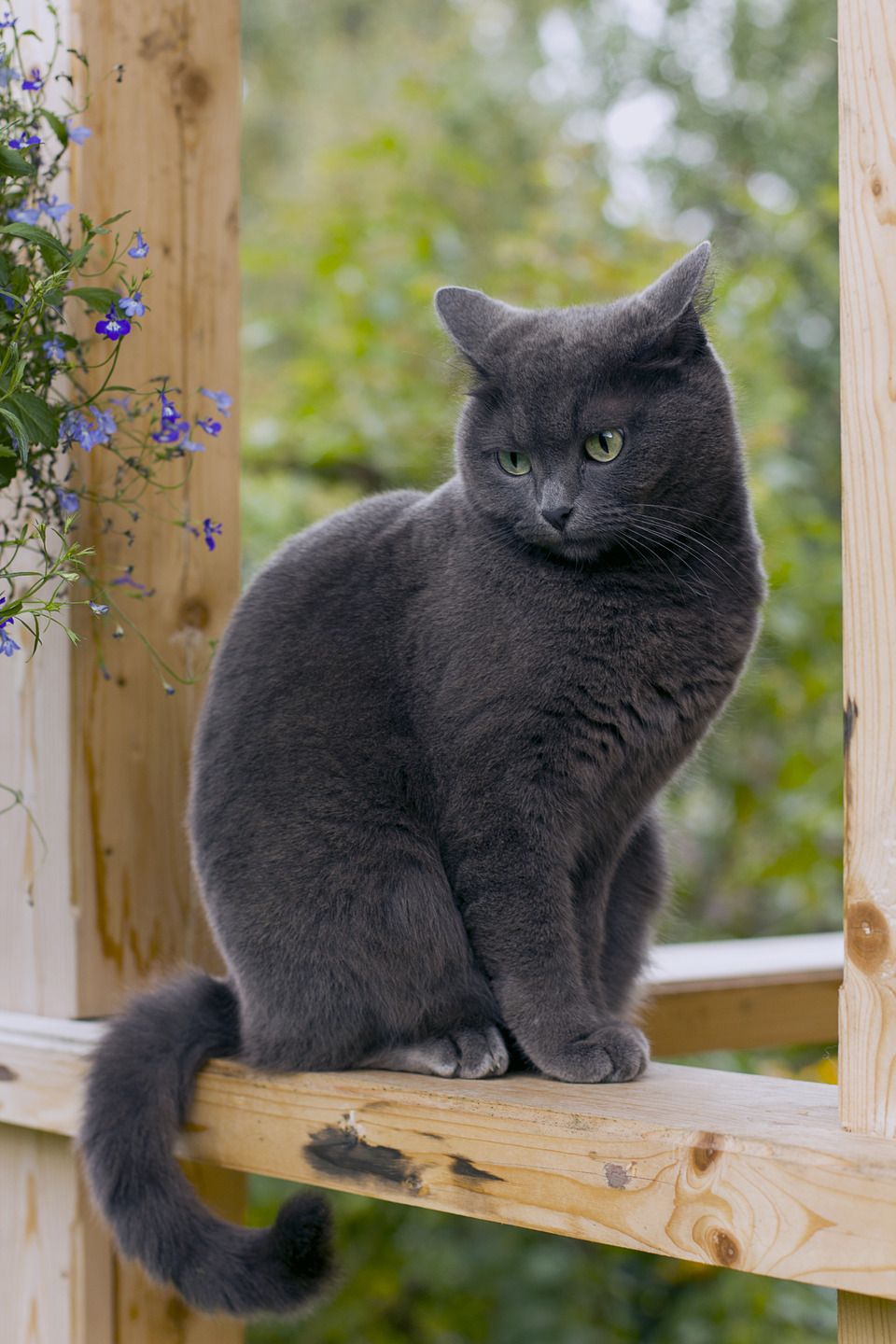
The Russian Blue is a cat breed that comes in colours varying from a light shimmering silver to a darker, slate grey. The colour is the result of a natural genetic mutation. They have a dense, brilliant blue-grey double coat with distinctive silver tipping on the guard hairs. They are known for their shyness with strangers but deep loyalty to their families. Russian Blues are gentle, intelligent, and have a reputation for being trainable.
Characteristics
Scores describe general breed tendencies, not an individual animal. A higher score means more of the named trait or need; it does not always mean better.
Life with a Russian Blue
Origin
| Origin | Russia |
| Group | Shorthair |
For the breed’s history, see the reference sources and Wikipedia link below.
Size and coat
| Weight | 3–7 kg |
| Lifespan | 15–20 years |
| Colors & Patterns | Blue (Grey) |
These are approximate adult ranges. Individual animals may be smaller or larger.
Temperament
| Personality | Gentle · Shy · Intelligent · Loyal · Playful |
Often enjoys a mix of activity and rest.
Often seeks company and attention. Allow time together and help it get used to short periods alone.
Coat care
Usually needs relatively little coat care. Brush as needed for its coat and shedding.
Usually sheds relatively little. Low shedding does not mean an animal cannot cause allergies.
Living together
A familiar routine can help it settle in.
Teach children to handle it gently and leave it alone when it rests.
Introduce other pets gradually and watch how each animal responds.
Health and lifespan
A lifespan range is not a prediction for an individual animal. Breed scores cannot diagnose illness or replace a veterinary assessment.
Offer places to climb, hide, scratch, and rest. Try different toys to see what your cat enjoys.
More from breed and care sources
Excerpts from the linked sources. Read the original for full details.
About the Breed
Looking for a breed known as much for its brains as for its beauty? You may very well be looking for a Russian Blue. One of the cleverest of all cat breeds, these elegant silvery-grey shorthairs have emerald-green eyes that positively radiate with intelligence and charming faces that appear to be smiling at some secret joke. Easy to care for, easy to live with, Russians don’t need a lot of space to feel content, and while they may appear shy at first acquaintance, they quickly blossom into friendly, affectionate companions once they get to know you.
Breed History
Believed to have originated in the Archangel Isles in northern Russia, these cats have very little written history prior to the late 1800s. Russian folklore abounds with stories of these cats as good-luck charms and healing influencers, while other stories indicate they were the beloved pets of Russian royalty, not to mention two English queens. Thought to have been brought to England by sailors, Russians participated in the early English cat shows, but at the time they were called Archangel Cats and competed with all the other solid blue cats. From the early 20th century until World War II, Scandinavian breeders took the lead in developing the breed. After the war ended, U.S. breeders began importing cats from Europe and gradually combined the English and Scandinavian bloodlines to produce the Russian Blue we know today.
Character & Temperament
Few other breeds can match the Russian Blue for sheer intelligence, and when it comes to mechanical aptitude, they are at the top of the list. Every closed cabinet, every shut drawer, even sealed canisters or jars represent a tempting challenge to a Russian Blue; owners should never be surprised to find an unexpectedly open door, drawer or jar. It’s wise to divert their attention with intellectually-stimulating puzzle toys as well as interactive games. However, they are also loving companions who will seek out a spot on your lap or even ride through the house on your shoulder. Best suited to quieter environments, many Russians do thrive in noisier households and make friends with other animals. It is typical for a Russian to hide under the sofa when a guest enters the house, but soon its natural curiosity will take over and it will come out to investigate the newcomer. Very sensitive to their owners’ moods, Russians will clown around in an attempt to cheer you up or offer gentle purrs and head butts to a crying child. They are good pets for older children, who will let the cat take its time feeling comfortable around them.
Physical Appearance
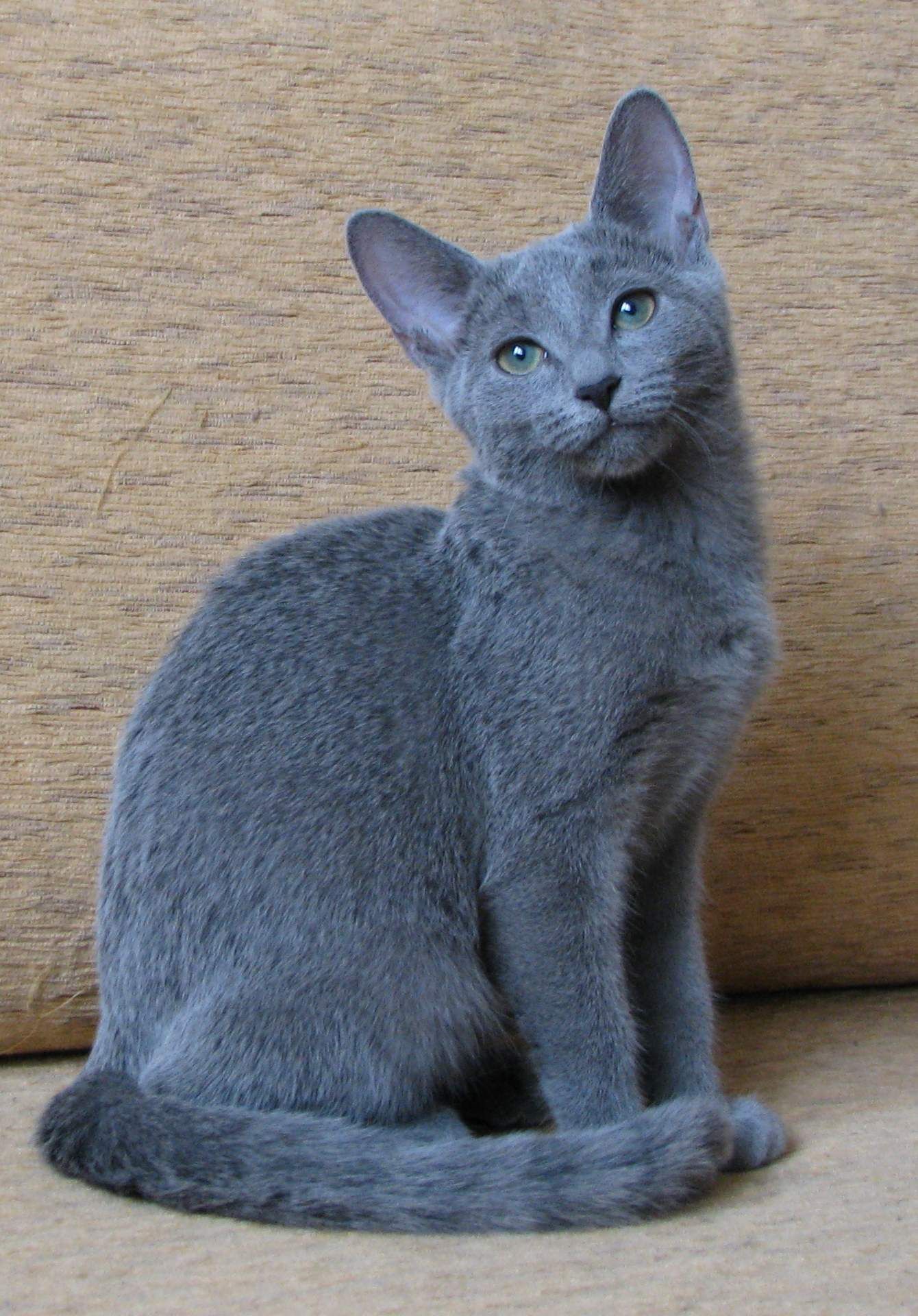
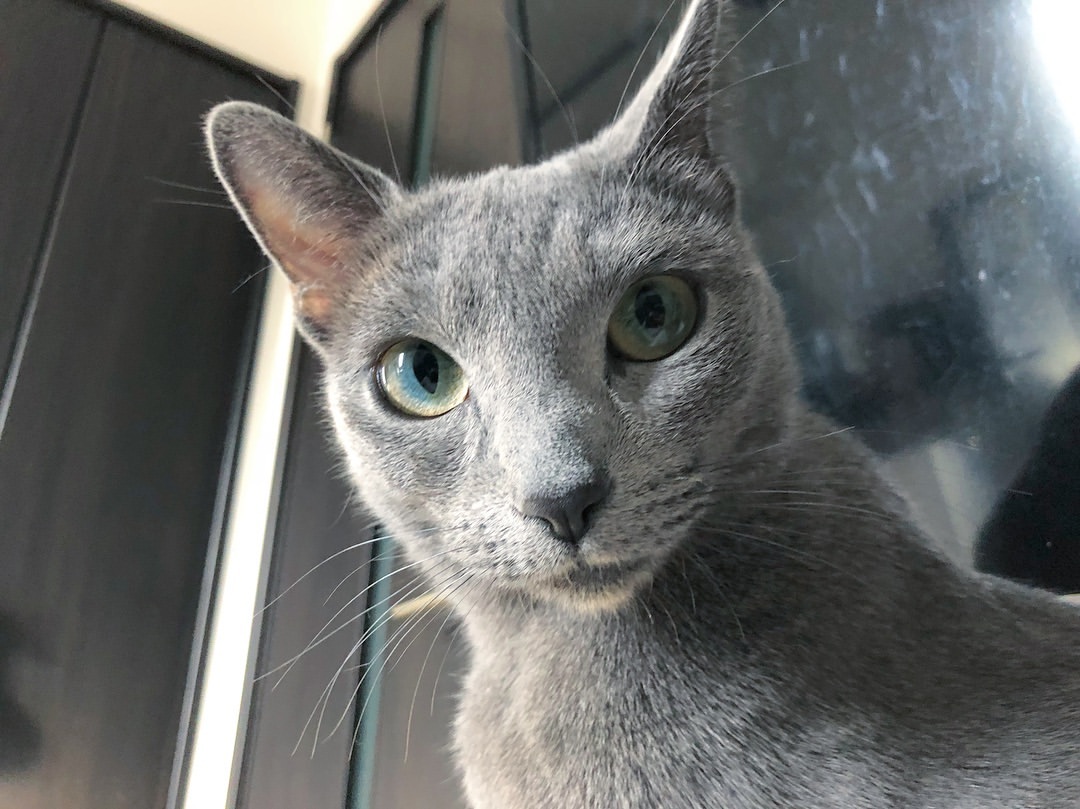
The luxuriously dense, plush coat of a Russian usually catches your eye first, especially if it is sparkling in the sunlight. The silver tips appear to glisten when the light hits them. Run your fingers through the coat and you’ll see that they leave little “footprints” behind. The intensity of the green eye color usually deepens with age. Other features include a medium-long, graceful body, a modified wedge-shaped head with a two-plane profile, and large ears, broad at the base and set far apart. These are medium-sized cats, with males rarely exceeding 10 pounds and females ranging from 5 to 8 pounds.
Grooming
Russian Blues are clean cats who require very little in the way of grooming. Combing two or three times a month will help keep shedding under control and aside from that, you need only keep the claws trimmed and the eyes and ears clean. Occasionally, a coat may become oily or greasy and benefit from a bath; in this case, consult your breeder for product recommendations as every coat is slightly different.
Life at home
Popular all over the world, this healthy, natural breed is not known to have any specific genetic problems, but some believe the relatively small gene pool may make the cats more susceptible to certain diseases. In addition, Russians have large appetites and if not provided with frequent, interactive exercise, are at risk of becoming obese, which can lead to many other health issues in and of itself. Monitor your Russian’s food intake carefully.
Breed Overview
The Russian Blue, a rare cat breed in the U.S. and Canada, is known for being independent, intelligent, and beautiful. An agile, medium-size cat that typically weighs 7–12 pounds, Russian Blues are fine-boned with eyes that go from golden in their youth to a brilliant green in adulthood—and, as their name suggests, their short, dense double coat comes in just one color: blue (a deep shade of gray with silver tips, to be precise). “This is a hallmark and gives the breed a shimmering effect when it moves,” says Stephanie Grady of Northernblue Cattery, a CFA-registered cattery near Minneapolis, where she’s been breeding and showing Russian Blues for 10 years.
Care Guide
Reserved, especially with new people, Russian Blue cats are not known for being particularly cuddly or clingy. But they are sweet and, with proper socialization, bond closely with their family. Opportunities to climb and perch are a must for these keen observers, and they love a routine—but that doesn’t mean they need to be with you all the time. In fact, they generally do well as the only cat in the house, even if you leave them during the day. If you have a boisterous household, make sure your Russian Blue has a space for some peace and quiet.