Origin
United States / Canada
Lifespan
10–12 years
Weight
3–5 kg
Group
Semi-Longhair
Personality
Colors & Patterns
Ruddy (Usual) · Sorrel (Red) · Blue · Fawn
Somali
About This Breed
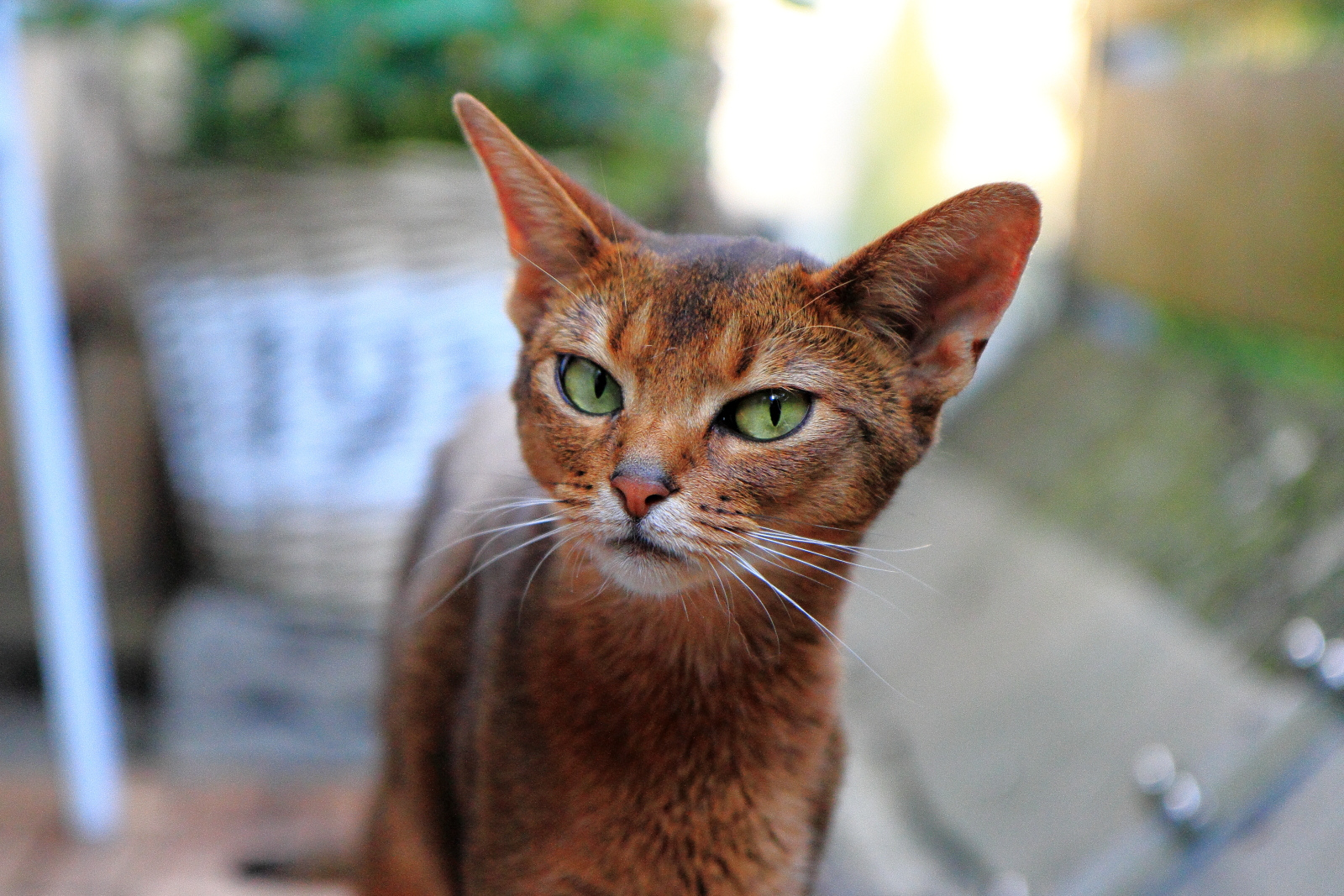
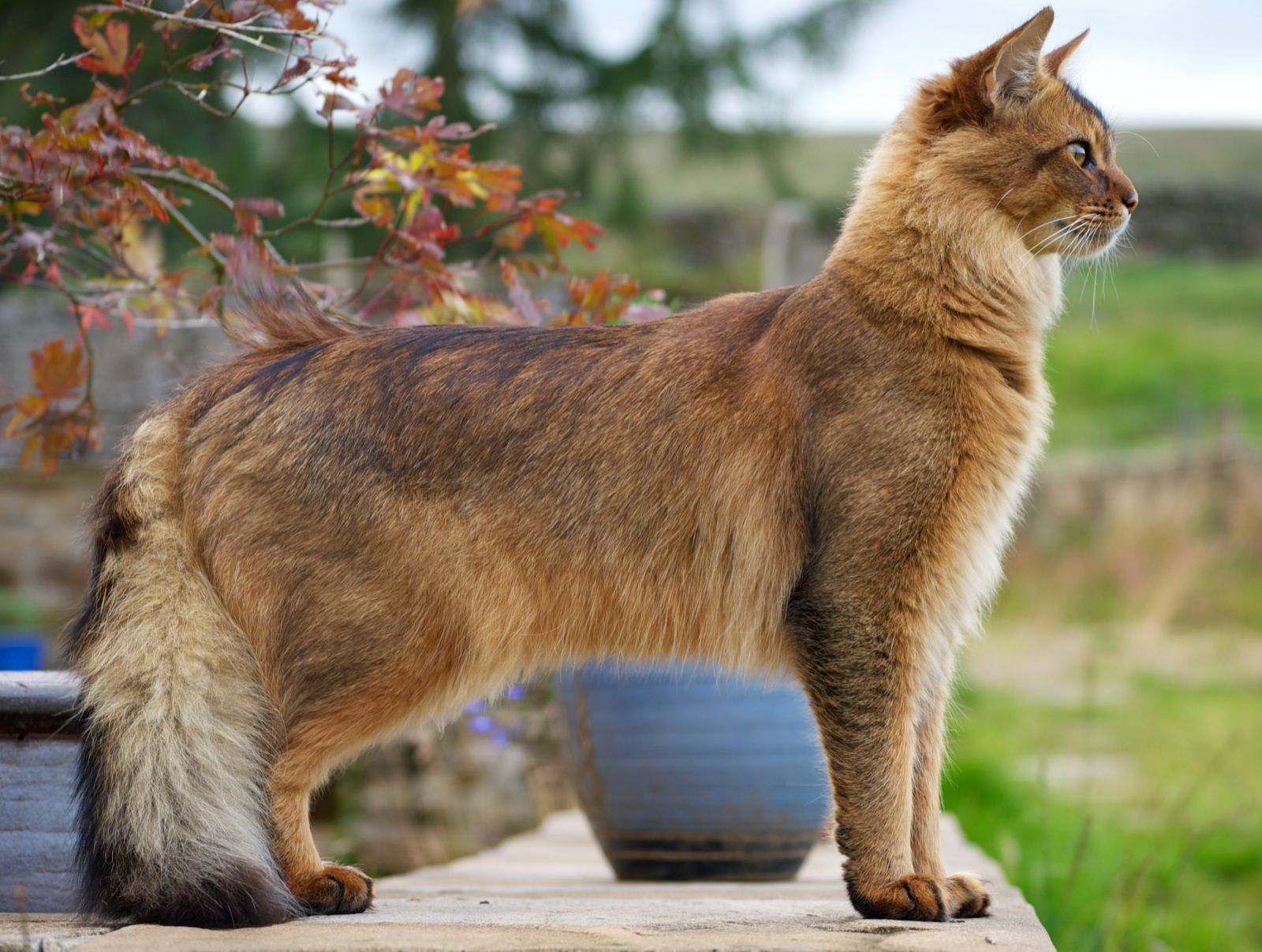
The Somali is a long-haired variety of the Abyssinian cat. The name was devised to reference Somalia, neighbour to Ethiopia (formerly Abyssinia). They have a ticked tabby coat, with bands of colour on each hair shaft and a bushy tail that resembles a fox's tail. They are nicknamed 'fox cats' for this reason. Somalis are very active, curious, and playful, often described as 'forever kittens'. They love to explore and can be mischievous.
Characteristics
Scores describe general breed tendencies, not an individual animal. A higher score means more of the named trait or need; it does not always mean better.
Life with a Somali
Origin
| Origin | United States / Canada |
| Group | Semi-Longhair |
For the breed’s history, see the reference sources and Wikipedia link below.
Size and coat
| Weight | 3–5 kg |
| Lifespan | 10–12 years |
| Colors & Patterns | Ruddy (Usual) · Sorrel (Red) · Blue · Fawn |
These are approximate adult ranges. Individual animals may be smaller or larger.
Temperament
| Personality | Active · Playful · Curious · Intelligent · Social |
Usually active. Make time for play, exercise, and activities that keep it interested.
Often seeks company and attention. Allow time together and help it get used to short periods alone.
Coat care
Regular brushing helps remove loose hair and prevent tangles.
Some shedding is expected, and it may change with the season.
Living together
Often adjusts to changes fairly well, though a gradual introduction still helps.
Often gets along with children, but an adult should still supervise their time together.
Often gets along with other pets. Introduce them gradually rather than assuming they will be friends.
Health and lifespan
A lifespan range is not a prediction for an individual animal. Breed scores cannot diagnose illness or replace a veterinary assessment.
Offer places to climb, hide, scratch, and rest. Try different toys to see what your cat enjoys.
More from breed and care sources
Excerpts from the linked sources. Read the original for full details.
About the Breed
Visualize the vibrant color and high-energy spirit of an Abyssinian, adorned with a full ruff, a soft silky coat, and a dramatic, bushy tail. You’ve just imagined a Somali! But no need to rely on imagination, these strikingly beautiful cats are quite real and ready to charm their way into your life! Often compared to a fox, Somalis move swiftly, on tiptoe, their full, plumy tails held high with pride—definitely reminiscent of a fox in pursuit of prey. In this case, however, the prey is more likely to be a feather toy, and you just might not get it back.
Breed History
There’s no documentation on precisely how the recessive longhair gene entered the Abyssinian gene pool, but some estimates indicate that barely a dozen Abys survived after World War II. Since many litters from this period included cats of unknown parentage, it seems quite possible that the longhair gene could have been introduced. As longhair kittens appeared, they were quickly petted out, and most breeders would not to admit to producing them. However, a stubborn, isolated few were fascinated by the longhair kittens and began to work with them. In the mid-1960s, Evelyn Mague produced “George,” one of the first documented longhair Abyssinians, and christened the developing breed the “Somali,” after Somalia, the country that borders on Abyssinia (now Ethiopia). Acceptance in the show ring was a long struggle, however; it was not until 1976 that CFA began registering Somalis, and not until 1979 that they achieved championship status.
Character & Temperament
Active, curious, and bold, Somalis are intrigued by the challenge of a closed cupboard door and are so intelligent that they may learn how to unlatch it. If provided with plenty of toys, they are capable of amusing themselves for hours, but are happiest when engaged in some sort of interactive play with another pet or a human. There’s a very sweet side to their well-balanced temperament, and they will demonstrate their affection for owners with head butts, kneading, and sometimes, rearranging your hairstyle. Somalis tend to be fascinated with water, and may turn on a faucet in order to watch the water drip. They follow their people from room to room, often matching moods with them, settling in to purr and knead at your feet while you work but exploding with energy when you become more active around the house. They are adept at communication with humans but it may not be vocal; their body language makes it very clear when they are looking for attention, play, or food.
Physical Appearance
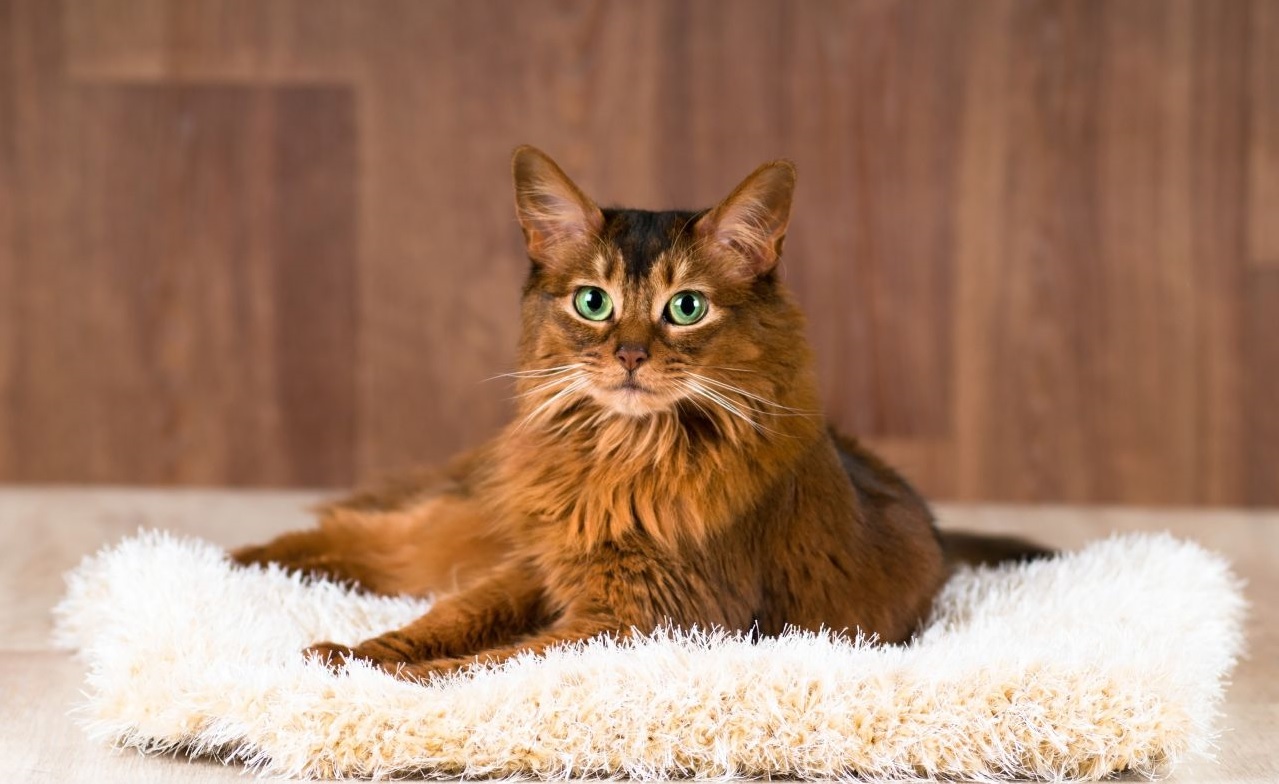
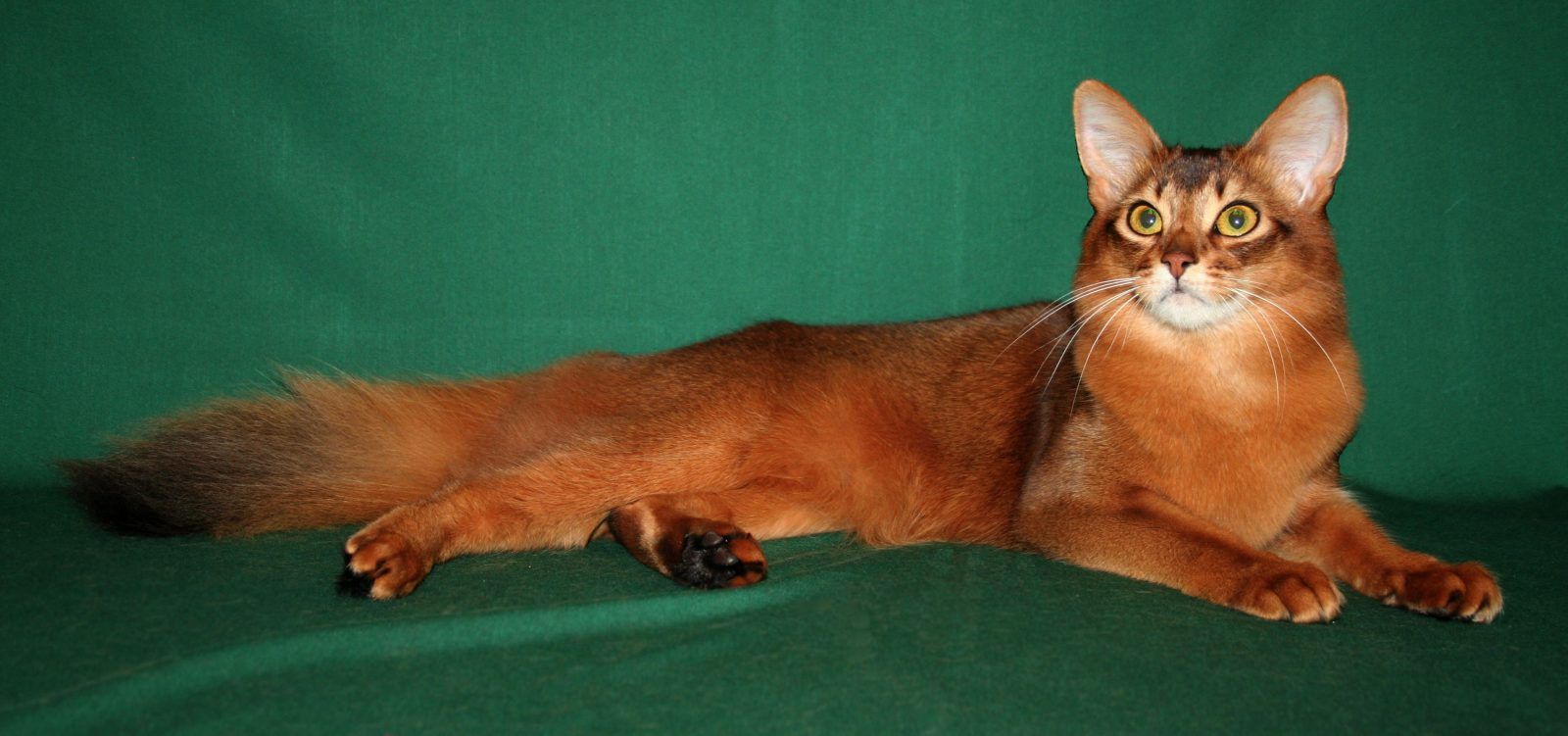
Medium in size, these cats are well-proportioned, solid, and muscular with silky, medium-length coats that glow with color. Each hair has multiple bands of color, which creates a shimmering, wild look that is truly breathtaking in a fully coated, properly groomed cat. The coat is longer around the ruff, tummy, and britches, and reaches its maximum length on the gorgeously plumed tail. Their heads have a modified wedge shape that is slightly rounded, with gentle contours; large, flaring ears and expressive, almond-shaped eyes complete the look. Eye color can range from intense green to rich copper.
Grooming
Despite their longer coats, Somalis are not a challenge to groom. The coat is relatively tangle-free and resists matting; however, weekly combing is recommended to remove dead hair and control shedding. Somalis generally do not need bathing unless they are being shown. However, some cats may have more oily coats, which can cause the hair to clump up, especially around the base of the tail and up the spine. If you notice this, your cat would benefit from a bath, and you should contact your breeder for recommended products and tips on bathing procedure.
Life at home
Thanks to genetic testing, Somali breeders, like Abyssinian breeders, are now able to easily remove carriers of inherited diseases that once caused anemia and blindness from their gene pool. Some other heritable health issues, however, cannot be screened via genetic testing so you may want to talk to your breeder about any history of renal amyloidosis in the lines. Most breeders are committed to managing the health of their breeding cats and kittens, and will help you learn how to care for your cat to ensure a long life.
Breed Overview
The Somali cat is lean, compact, athletic, and graceful. But perhaps this cat breed’s biggest draw is her personality. As clever and curious as she is social and playful, this stunning, long-haired feline makes an entertaining and loving addition to any family—as long as the family provides plenty of mental and physical stimulation, because this kitty doesn’t like to be bored. The Somali cat breed was first known in Australian cat shows as a long-haired Abyssinian in 1965, and their striking ticked coats can be ruddy (red), cinnamon, blue, fawn, chocolate, or lilac, according to The International Cat Association (TICA).
Care Guide
Dana Tashjian, VMD, is a veterinarian in Sarasota, Florida. She has two Somalis and is very familiar with Somali cat characteristics. “They’re very social—sometimes almost annoyingly so,” she says. “They’re always around, and they’re very high-energy. They like people, and they’re definitely going to be a part of your life and your family.” That said, Somalis aren’t typically lap cats and don’t usually like to be held, though they do like to be right next to their people. It's also not uncommon for Somalis to enjoy hanging out on your shoulder. “They just like to know what you’re doing at all times—but on their terms,” Tashjian says. Their long, silky coat and bushy, foxlike tail are not especially prone to tangling or matting, but pet parents should still brush them once a week (and be ready with the vacuum—especially in the summer, when shedding tends to pick up). This can make them a great choice for someone who loves long-haired cats but doesn’t want the demanding grooming requirements of, say, a Persian.