Origin
United States
Lifespan
12–15 years
Weight
16–32 kg
Height
46–58 cm
Personality
Colors & Patterns
Black · Blue Merle · Red · Red Merle
Australian Shepherd
About This Breed
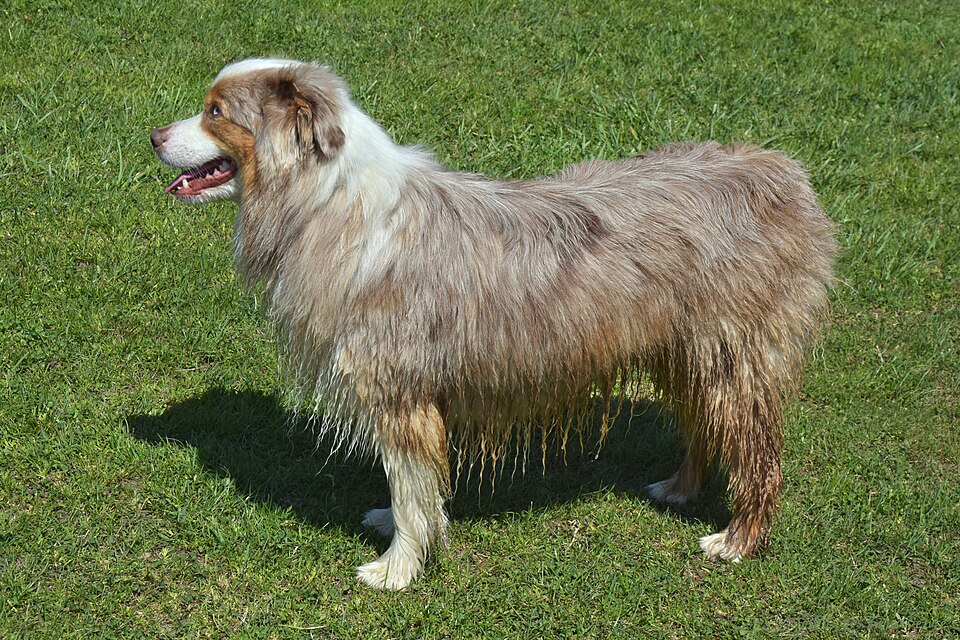
The Australian Shepherd is a breed of herding dog from the United States. Contrary to its name, it was developed in the US, not Australia. Australian Shepherds are often seen working as working dogs on ranches and farms, and are especially prized in rodeos as cowboy dogs. They are known for their beautiful merle coats, heterochromatic eyes, and natural bobtails. As working dogs, they need high levels of physical and mental stimulation.
Characteristics
Scores describe general breed tendencies, not an individual animal. A higher score means more of the named trait or need; it does not always mean better.
Life with a Australian Shepherd
Origin
| Origin | United States |
| Group | Herding |
For the breed’s history, see the reference sources and Wikipedia link below.
Size and coat
| Weight | 16–32 kg |
| Lifespan | 12–15 years |
| Height | 46–58 cm |
| Colors & Patterns | Black · Blue Merle · Red · Red Merle |
These are approximate adult ranges. Individual animals may be smaller or larger.
Temperament
| Personality | Intelligent · Active · Good-natured · Loyal · Protective |
Usually active. Make time for play, exercise, and activities that keep it interested.
Often seeks company and attention. Allow time together and help it get used to short periods alone.
Coat care
Regular brushing helps remove loose hair and prevent tangles.
Can shed a lot. Regular brushing can help manage loose hair.
Living together
A familiar routine can help it settle in.
Often gets along with children, but an adult should still supervise their time together.
Often gets along with other pets. Introduce them gradually rather than assuming they will be friends.
Training and activities
May learn quickly. Keep sessions varied and practice calmly around distractions.
Choose walks, sniffing games, and play to suit the dog’s age and health. Allow rest as well.
A lifespan range is not a prediction for an individual animal. Breed scores cannot diagnose illness or replace a veterinary assessment.
More from breed and care sources
Excerpts from the linked sources. Read the original for full details.
Breed Overview
Australian Shepherds are highly intelligent and active medium-sized dogs with natural herding instincts and muscular and agile builds. They were originally bred to be used as working dogs and still have a strong drive to get jobs done and please their people. Standing between 18–23 inches tall at the shoulder, the average Australian Shepherd weight is 40–65 pounds when full-grown, with males being generally larger than females. Australian Shepherd tails can be naturally bobbed, or they can be born with full-length tails.
Care Guide
Australian Shepherds are high-energy dogs who love to have a job. They are known to be smart and loyal dogs who are typically friendly but can sometimes take a bit of time to warm up to strangers. Due to their herding background, Australian Shepherds can have a strong prey drive and love games like fetch. But they might also like to chase moving objects—such as children, cats, cars, and other wheeled objects like scooters, bikes, and golf carts. However, with early socialization, they can live harmoniously with cats, children, and other dogs. With their lifestyle and temperament being so high-energy, pet parents of Australian Shepherd dogs need to be considerate of their joint and hip health to ensure healthy mobility at all life stages.