Origin
United Kingdom
Lifespan
11–14 years
Weight
20–36 kg
Height
— cm
Personality
Colors & Patterns
White · Brindle · Red Fawn · Black Brindle
Bull Terrier
About This Breed
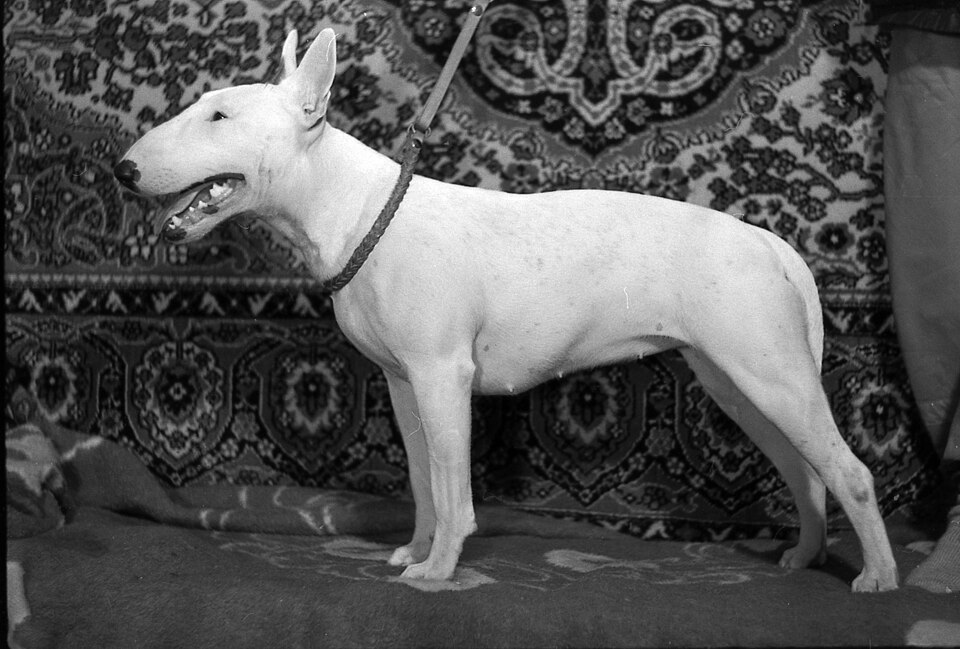
The Bull Terrier is recognized by its unique egg-shaped head, a feature distinctive to this breed. It was originally developed in 19th century England by crossing bulldogs and various terriers. Today's Bull Terrier is a playful, mischievous, and loving companion. They are energetic and require regular exercise. Bull Terriers bond closely with their families and can be protective. They have a strong personality and need consistent training.
Characteristics
Scores describe general breed tendencies, not an individual animal. A higher score means more of the named trait or need; it does not always mean better.
Life with a Bull Terrier
Origin
| Origin | United Kingdom |
| Group | Terriers |
For the breed’s history, see the reference sources and Wikipedia link below.
Size and coat
| Weight | 20–36 kg |
| Lifespan | 11–14 years |
| Colors & Patterns | White · Brindle · Red Fawn · Black Brindle |
These are approximate adult ranges. Individual animals may be smaller or larger.
Temperament
| Personality | Playful · Mischievous · Determined · Active · Courageous |
Usually active. Make time for play, exercise, and activities that keep it interested.
Often seeks company and attention. Allow time together and help it get used to short periods alone.
Coat care
Usually needs relatively little coat care. Brush as needed for its coat and shedding.
Usually sheds relatively little. Low shedding does not mean an animal cannot cause allergies.
Living together
Often adjusts to changes fairly well, though a gradual introduction still helps.
Often gets along with children, but an adult should still supervise their time together.
Introduce other pets gradually and watch how each animal responds.
Training and activities
Practice in short sessions and reward the behavior you want.
Choose walks, sniffing games, and play to suit the dog’s age and health. Allow rest as well.
A lifespan range is not a prediction for an individual animal. Breed scores cannot diagnose illness or replace a veterinary assessment.
More from breed and care sources
Excerpts from the linked sources. Read the original for full details.
Breed Overview
While the Bull Terrier isn’t among the most popular dog breeds in the United States, they’re certainly one of the most recognizable thanks to their egg-shaped heads, triangular eyes, and muscular bodies. (Not to mention that the Bull Terrier has frequently been in the public eye as the Target dog). The Bull Terrier’s athletic build generally reaches a height of 21–22 inches, and they weigh in at around 50–70 pounds. This stocky dog breed was recognized by the American Kennel Club (AKC) in 1885, and despite their unfortunate beginnings in bull-baiting, Bull Terriers are a sweet and lovable breed.
Care Guide
The Bull Terrier is playful, athletic, and generally low-maintenance—as long as they get plenty of interaction with people. “They’re easy to engage in exercise and are happy to greet each new day,” says Kim Bebb, president of the Bull Terrier Club of America. “They thrive on being one of the family.” That being said, Bull Terriers are still a member of the terrier group, and with that comes a certain amount of energy and independent thinking. So it’s important to provide this breed with physical and mental stimulation as well as consistent positive reinforcement training. Early socialization and obedience training will go a long way toward ensuring your Bull Terrier puppies grow into well-mannered family members.