Origin
Croatia
Lifespan
13–16 years
Weight
20–32 kg
Height
56–61 cm
Personality
Colors & Patterns
White with Black or Liver Spots
Dalmatian
About This Breed
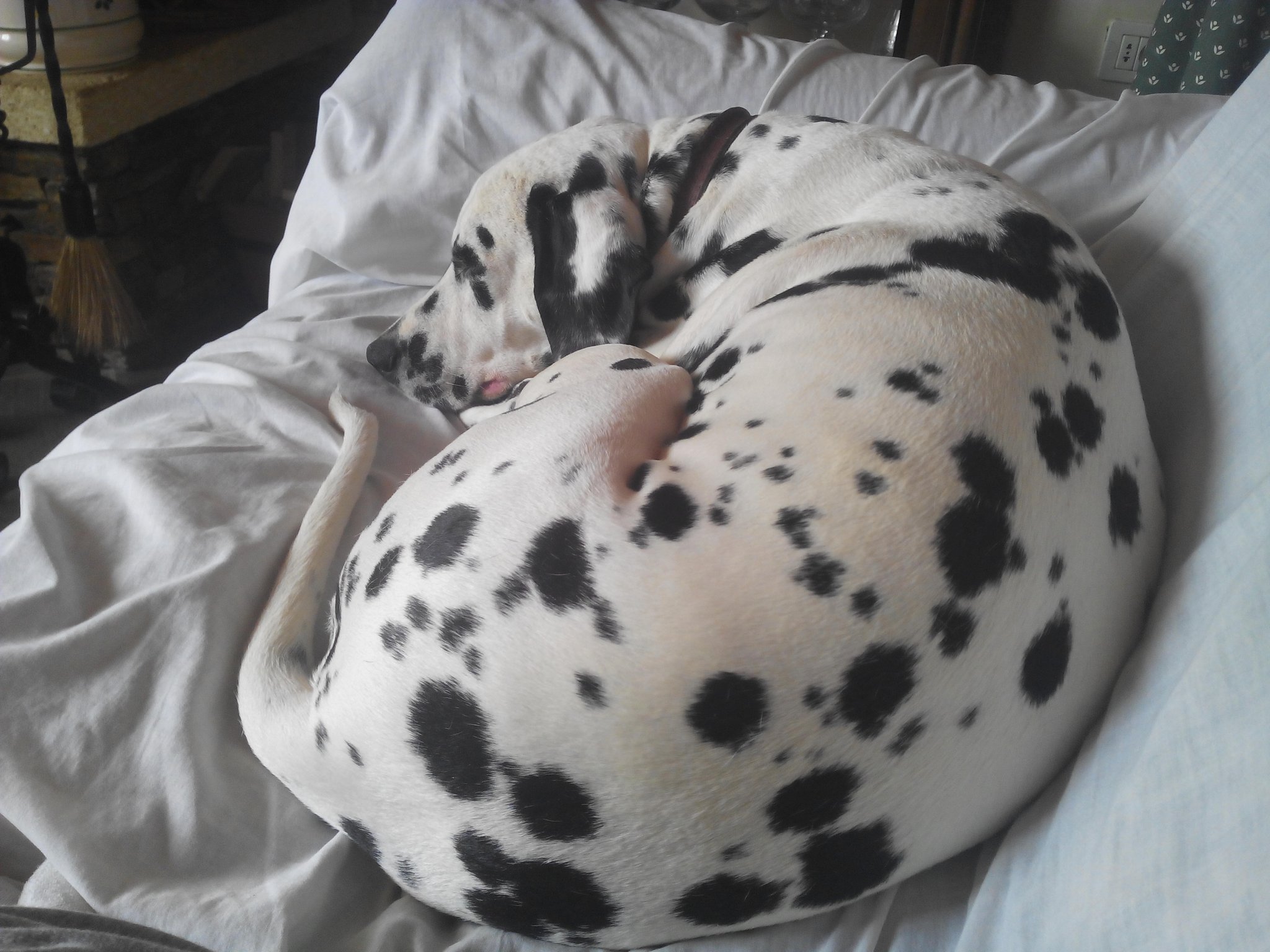
The Dalmatian is a breed of large dog, noted for its unique white coat marked with black or brown-colored spots. The origins of this breed can be traced back to Croatia and its historical region of Dalmatia. Dalmatians are perhaps best known as the firehouse dog and for their role in Disney's '101 Dalmatians'. They are energetic, playful dogs that require a lot of exercise. Dalmatians are intelligent and sensitive dogs with a good memory.
Characteristics
Scores describe general breed tendencies, not an individual animal. A higher score means more of the named trait or need; it does not always mean better.
Life with a Dalmatian
Origin
| Origin | Croatia |
| Group | Non-sporting |
For the breed’s history, see the reference sources and Wikipedia link below.
Size and coat
| Weight | 20–32 kg |
| Lifespan | 13–16 years |
| Height | 56–61 cm |
| Colors & Patterns | White with Black or Liver Spots |
These are approximate adult ranges. Individual animals may be smaller or larger.
Temperament
| Personality | Active · Playful · Sensitive · Energetic · Outgoing |
Usually active. Make time for play, exercise, and activities that keep it interested.
Often seeks company and attention. Allow time together and help it get used to short periods alone.
Coat care
Usually needs relatively little coat care. Brush as needed for its coat and shedding.
Some shedding is expected, and it may change with the season.
Living together
A familiar routine can help it settle in.
Often gets along with children, but an adult should still supervise their time together.
Often gets along with other pets. Introduce them gradually rather than assuming they will be friends.
Training and activities
May learn quickly. Keep sessions varied and practice calmly around distractions.
Choose walks, sniffing games, and play to suit the dog’s age and health. Allow rest as well.
A lifespan range is not a prediction for an individual animal. Breed scores cannot diagnose illness or replace a veterinary assessment.
More from breed and care sources
Excerpts from the linked sources. Read the original for full details.
Breed Overview
As the original fire dog, Dalmatians would run alongside fire carriages in the 1700s, according to the Dalmatian Club of America (DCA). The spotted dogs acted as sirens, barking to let people know they needed to get out of the way of the carriage. Dalmatians still work with firefighters today, though most often as a mascot comforting firefighters or teaching young people about fire safety. Dalmatians’ loyalty, intelligence, and energetic nature means they require a highly active lifestyle. They are natural competitors and love competing in dog sports like agility.
Care Guide
Adopting a Dalmatian means committing to an active lifestyle. Dalmatians are rambunctious, highly energetic, and need a lot of daily exercise. Without adequate activity, these dogs may develop undesirable behaviors to keep themselves entertained. Dalmatians shouldn’t be left alone for long periods of time—not only because they crave activity, but also because they can experience separation anxiety. They need a family of homebodies or people who are willing to take their dog with them wherever they go.