Origin
Germany
Lifespan
8–10 years
Weight
50–82 kg
Height
71–86 cm
Personality
Colors & Patterns
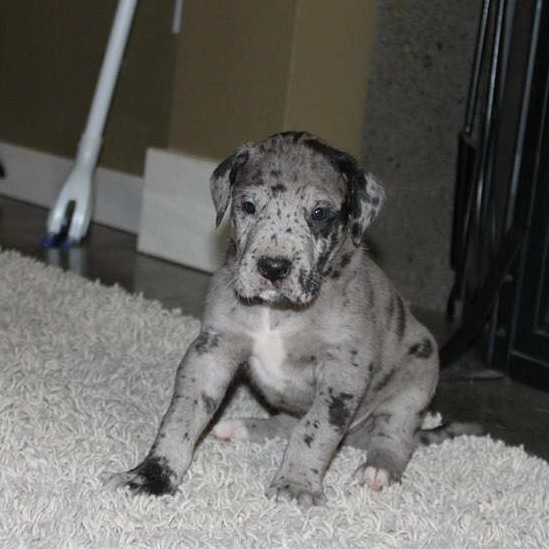
Fawn · Brindle · Blue · Black · Harlequin · Merle · Mantle
Great Dane
About This Breed
The Great Dane is a large German dog. Known as the 'Apollo of Dogs', the Great Dane is one of the tallest dog breeds. Great Danes are known for their massive stature and gentle demeanour — they are often called 'gentle giants'. Despite their imposing size, they are friendly, patient, and devoted dogs that get along well with children and other animals. They were originally bred for hunting large game and guarding estates.
Characteristics
Scores describe general breed tendencies, not an individual animal. A higher score means more of the named trait or need; it does not always mean better.
Life with a Great Dane
Origin
| Origin | Germany |
| Group | Working |
For the breed’s history, see the reference sources and Wikipedia link below.
Size and coat
| Weight | 50–82 kg |
| Lifespan | 8–10 years |
| Height | 71–86 cm |
| Colors & Patterns | Fawn · Brindle · Blue · Black · Harlequin · Merle · Mantle |
These are approximate adult ranges. Individual animals may be smaller or larger.
Temperament
| Personality | Friendly · Devoted · Patient · Dependable · Gentle |
Usually active. Make time for play, exercise, and activities that keep it interested.
Often seeks company and attention. Allow time together and help it get used to short periods alone.
Coat care
Usually needs relatively little coat care. Brush as needed for its coat and shedding.
Some shedding is expected, and it may change with the season.
Living together
Often adjusts to changes fairly well, though a gradual introduction still helps.
Often gets along with children, but an adult should still supervise their time together.
Often gets along with other pets. Introduce them gradually rather than assuming they will be friends.
Training and activities
May learn quickly. Keep sessions varied and practice calmly around distractions.
Choose walks, sniffing games, and play to suit the dog’s age and health. Allow rest as well.
A lifespan range is not a prediction for an individual animal. Breed scores cannot diagnose illness or replace a veterinary assessment.
More from breed and care sources
Excerpts from the linked sources. Read the original for full details.
Breed Overview
The Great Dane is a gentle giant originally bred in the 1800s for hunting wild boar and guarding estates in Germany. It remains a mystery how they came to be named Great Danes, as the breed has no roots in Denmark. Despite the impressive Great Dane size and guardian history, they are kind and enjoy family life. Nicknamed the “Apollo of dogs,” Great Danes are the tallest in the working class of dog breeds and one of the biggest breeds in existence. Caring for a Great Dane Danes are known for their size.
Care Guide
Danes are known for their size. A Great Dane’s height falls between 28 and 32 inches tall. The record-holder for the world’s tallest Great Dane, Zeus, stood 41 inches tall (and over 7 feet when standing on his hind legs). They’re also heavy—the average Great Dane weight is somewhere between 110 and 175 pounds. This growth happens quickly, too, so don’t expect your new Great Dane puppy to stay little for long. According to the Great Dane Club of America, “your puppy will grow as much in his first year as a child grows in fourteen years.” A Great Dane’s colors include white, black, harlequin, blue, merle, and fawn, among other hues. While colors and patterns vary, all Great Dane dogs have a short coat that, despite not shedding much, needs a weekly brush-through. Because of their size, the average Great Dane lifespan is shorter than many other dog breeds, at just seven to 10 years. But for pet parents seeking a calm and gentle companion, bringing home a Great Dane puppy can be a great choice—if you’ve got the space for a dog of this size.