Origin
France
Lifespan
13–15 years
Weight
3–5 kg
Height
— cm
Personality
Colors & Patterns
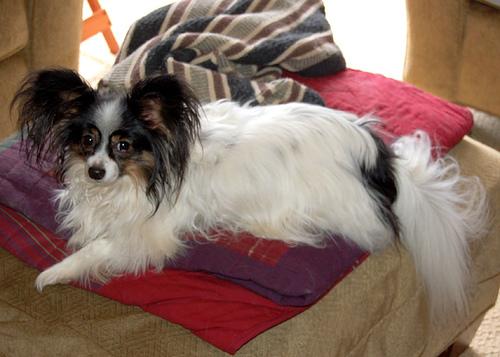
White with Patches of Any Color
Papillon
About This Breed
The Papillon takes its name from the French word for butterfly, referring to the breed's large, spread-out ear fringes that resemble butterfly wings. One of the oldest of the toy spaniels, they appear frequently in paintings by the Old Masters. Despite their delicate appearance, Papillons are lively, athletic, and remarkably intelligent. They excel in agility and obedience competitions. They are energetic, always happy, friendly and adventurous.
Characteristics
Scores describe general breed tendencies, not an individual animal. A higher score means more of the named trait or need; it does not always mean better.
Life with a Papillon
Origin
| Origin | France |
| Group | Toy |
For the breed’s history, see the reference sources and Wikipedia link below.
Size and coat
| Weight | 3–5 kg |
| Lifespan | 13–15 years |
| Colors & Patterns | White with Patches of Any Color |
These are approximate adult ranges. Individual animals may be smaller or larger.
Temperament
| Personality | Happy · Alert · Friendly · Energetic · Intelligent |
Usually active. Make time for play, exercise, and activities that keep it interested.
Often seeks company and attention. Allow time together and help it get used to short periods alone.
Coat care
Regular brushing helps remove loose hair and prevent tangles.
Usually sheds relatively little. Low shedding does not mean an animal cannot cause allergies.
Living together
Often adjusts to changes fairly well, though a gradual introduction still helps.
Often gets along with children, but an adult should still supervise their time together.
Often gets along with other pets. Introduce them gradually rather than assuming they will be friends.
Training and activities
Practice in short sessions and reward the behavior you want.
Choose walks, sniffing games, and play to suit the dog’s age and health. Allow rest as well.
A lifespan range is not a prediction for an individual animal. Breed scores cannot diagnose illness or replace a veterinary assessment.
More from breed and care sources
Excerpts from the linked sources. Read the original for full details.
Breed Overview
Papillon is the French word for butterfly, and it’s easy to see why the Papillon dog breed was given that name. These small dogs have big ears with long, wispy hairs that resemble a butterfly’s wings. Papillons have been depicted in artwork dating to the 16th century in Western Europe, according to the Papillon Club of America (PCA). Papillons are still extremely popular family dogs and canine companions today. At 8–11 inches tall and 5–10 pounds, Papillons are compact and adaptable. Despite their dainty stature and elegant coat, Papillons do well in any climate or setting.
Care Guide
A Papillon’s personality is shaped by the breed’s history; for hundreds of years, they served as companion animals. While every pup is an individual, many Papillons are friendly, adaptable dogs who love being in your lap or curled up next to you on the couch after they've had a chance to burn off some of their boundless energy. As smart dogs, they need lots of mental stimulation and attention. Their small size makes them a good dog for apartments, where their playful energy can be expended during indoor games or neighborhood walks. However, Papillons do tend to be more active than other toy breeds, so they need more exercise than you might think and love having access to fenced areas where they can run and play. The Papillon breed has long, feathered fur that needs brushing or combing a few times a week to prevent matting and tangles. Pet parents also need to dedicate themselves to training—with consistency and positive reinforcement, a Papillon puppy can grow to be the ideal companion.