Origin
Portugal
Lifespan
10–14 years
Weight
16–25 kg
Height
— cm
Personality
Colors & Patterns
Black · White · Brown · Black and White
Portuguese Water Dog
About This Breed
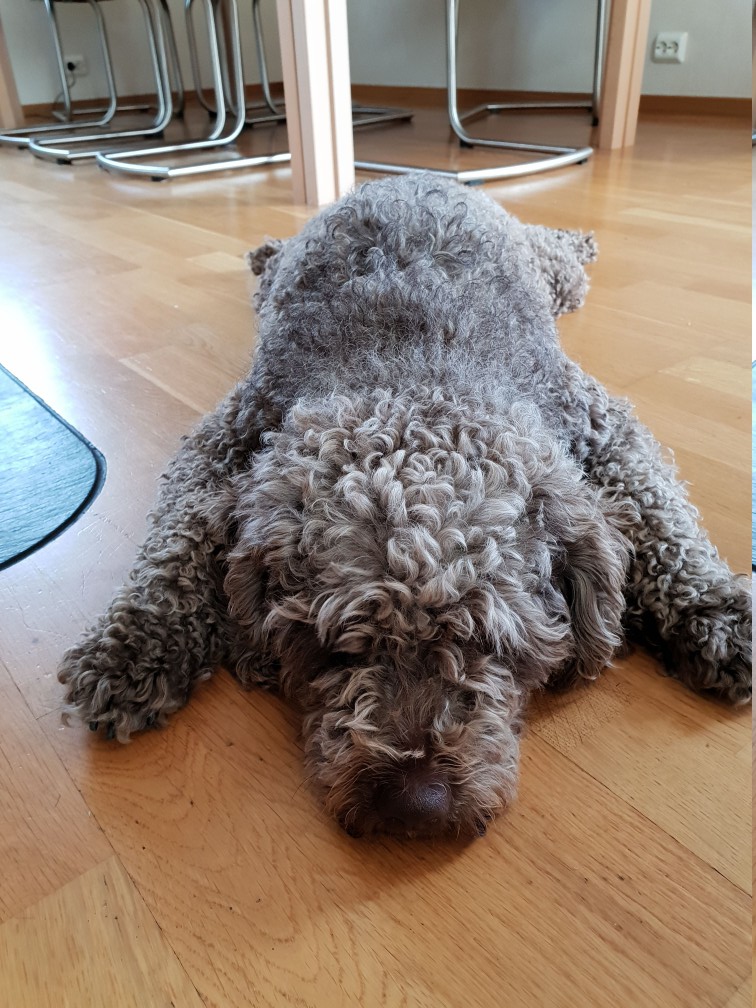
The Portuguese Water Dog was bred in Portugal to assist fishermen — diving for fish, swimming messages between ships, and retrieving lost tackle. They have a distinctive curly or wavy water-resistant coat, webbed feet, and exceptional swimming ability. Portuguese Water Dogs rose to US national prominence when chosen as family pets by President Barack Obama. They are active, loyal, and shed little, making them popular with allergy sufferers.
Characteristics
Scores describe general breed tendencies, not an individual animal. A higher score means more of the named trait or need; it does not always mean better.
Life with a Portuguese Water Dog
Origin
| Origin | Portugal |
| Group | Working |
For the breed’s history, see the reference sources and Wikipedia link below.
Size and coat
| Weight | 16–25 kg |
| Lifespan | 10–14 years |
| Colors & Patterns | Black · White · Brown · Black and White |
These are approximate adult ranges. Individual animals may be smaller or larger.
Temperament
| Personality | Obedient · Quarrelsome · Docile · Aggressive · Impetuous |
Usually active. Make time for play, exercise, and activities that keep it interested.
Often seeks company and attention. Allow time together and help it get used to short periods alone.
Coat care
Coat care can take more time. Check for tangles and choose a brushing routine that suits the coat.
Usually sheds relatively little. Low shedding does not mean an animal cannot cause allergies.
Living together
Often adjusts to changes fairly well, though a gradual introduction still helps.
Often gets along with children, but an adult should still supervise their time together.
Often gets along with other pets. Introduce them gradually rather than assuming they will be friends.
Training and activities
Practice in short sessions and reward the behavior you want.
Choose walks, sniffing games, and play to suit the dog’s age and health. Allow rest as well.
A lifespan range is not a prediction for an individual animal. Breed scores cannot diagnose illness or replace a veterinary assessment.
More from breed and care sources
Excerpts from the linked sources. Read the original for full details.
Breed Overview
Spirited, athletic, and intelligent, the Portuguese Water Dog is an excellent swimmer and seafarer bred to be a fisherman’s helper on Portugal’s coasts. They are beloved for their affectionate natures, minimal shedding, and adorable teddy bear-like faces—so much so that they even reached celebrity status: Sunny and the late Bo Obama, who both lived with the first family in the White House, may be the most famous Portuguese Water Dogs in U.S. history. But Portuguese Water Dogs, which can grow to be up to 23 inches tall and weigh between 35-60 pounds, are popular additions to households all over the U.S.
Care Guide
The jolly, affectionate Portuguese Water Dog can be a doting family pet if given the proper amount of exercise, training, and attention starting at an early age. They are also wired to work, according to the Portuguese Water Dog Club of America (PWDCA): The canines were bred from the 13th century to perform duties such as retrieving fishing gear and preventing fish from escaping nets along the coast of Portugal. That means pet parents should be prepared to provide their energetic Portuguese Water Dog with plenty of attention and exercise (at least 30-60 minutes per day). Those who do will be rewarded with loyalty, plenty of snuggles, and affection. Their robust, medium-size bodies are blessed with low-shedding coats, but their curly or wavy locks require regular grooming and care. “They are just happy-go-lucky, nice dogs,” says Pam Nichols, DVM, CCRP, CFI, immediate past president of the American Animal Hospital Association.