Origin
Russia
Lifespan
12–14 years
Weight
20–30 kg
Height
48–60 cm
Personality
Colors & Patterns
White · Cream · White and Biscuit
Samoyed
About This Breed
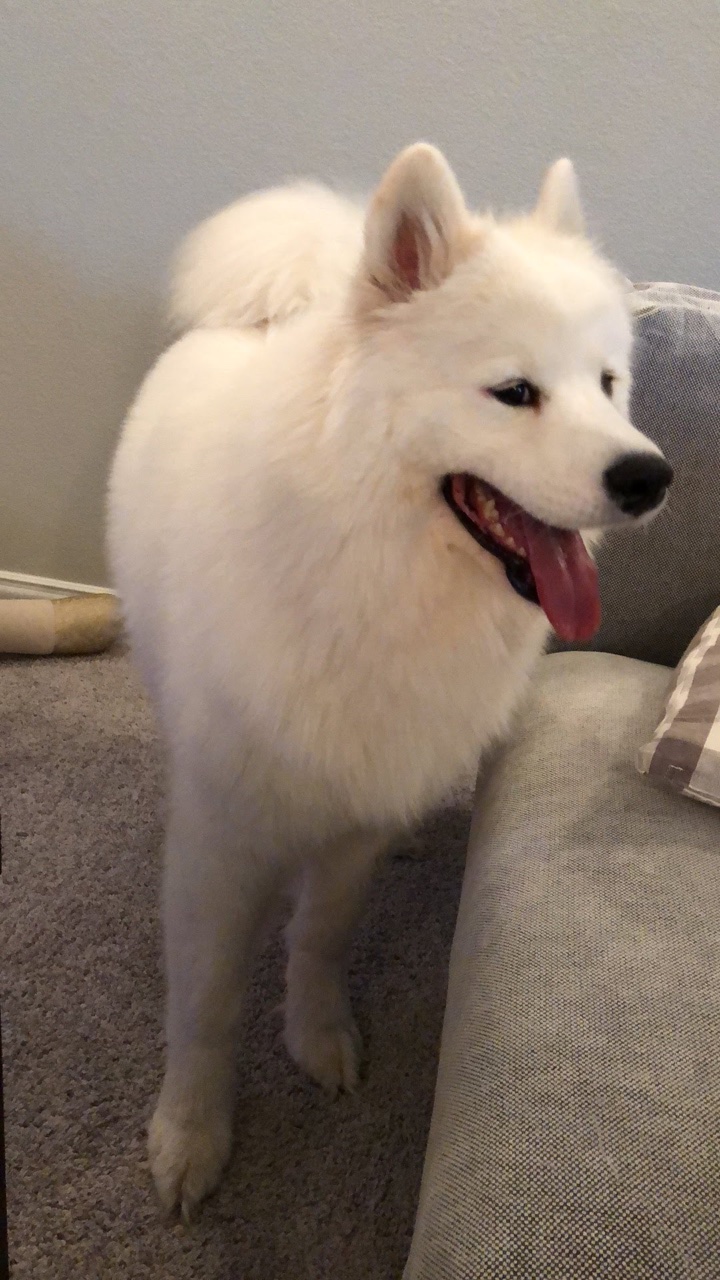
The Samoyed is a large herding dog breed with thick, white, double-layer coats. They are spitz-type dogs that take their name from the Samoyedic people of Siberia. Samoyeds are known for their signature 'Sammy smile'. Their fluffy white coat seems to always be in a permanent smile. They were bred to herd reindeer and pull sleds. They are gentle, playful, and friendly dogs, though they can be stubborn. Their thick coat requires significant grooming.
Characteristics
Scores describe general breed tendencies, not an individual animal. A higher score means more of the named trait or need; it does not always mean better.
Life with a Samoyed
Origin
| Origin | Russia |
| Group | Working |
For the breed’s history, see the reference sources and Wikipedia link below.
Size and coat
| Weight | 20–30 kg |
| Lifespan | 12–14 years |
| Height | 48–60 cm |
| Colors & Patterns | White · Cream · White and Biscuit |
These are approximate adult ranges. Individual animals may be smaller or larger.
Temperament
| Personality | Friendly · Gentle · Stubborn · Playful · Alert |
Usually active. Make time for play, exercise, and activities that keep it interested.
Often seeks company and attention. Allow time together and help it get used to short periods alone.
Coat care
Coat care can take more time. Check for tangles and choose a brushing routine that suits the coat.
Can shed a lot. Regular brushing can help manage loose hair.
Living together
A familiar routine can help it settle in.
Often gets along with children, but an adult should still supervise their time together.
Often gets along with other pets. Introduce them gradually rather than assuming they will be friends.
Training and activities
Practice in short sessions and reward the behavior you want.
Choose walks, sniffing games, and play to suit the dog’s age and health. Allow rest as well.
A lifespan range is not a prediction for an individual animal. Breed scores cannot diagnose illness or replace a veterinary assessment.
More from breed and care sources
Excerpts from the linked sources. Read the original for full details.
Breed Overview
The Samoyed dog (pronounced suh-moy-uhd) is best known for their pure-white fluffy coat, curled tail, friendly personality, and love of cold weather. These dogs are built for working in extremely cold climates—they were originally bred to herd reindeer and pull sleds for the Samoyed people in northwestern Siberia, according to the Samoyed Club of America (SCA). Because of their northern origins, Samoyeds have a very thick two-layer coat that consists of a long straight-haired topcoat and a dense soft undercoat.
Care Guide
As a playful, alert, and friendly dog, a Samoyed’s temperament can make a great companion for first-time pet parents who are ready to meet the high exercise and grooming needs this working demands. Samoyed dogs require daily brushing and do not do well in hot temperatures. Pet parents should be aware that a Samoyed can develop heatstroke in hot weather and monitor their dog for signs of overheating. That said, Samoyeds thrive in colder climates and love running through the snow. The Samoyed is an athletic working dog and does not tire easily. These dogs are most known for pulling sleds, herding, agility, and hunting. They need regular exercise (at least two hours a day!) and are very playful pups that love to be around people and other dogs.